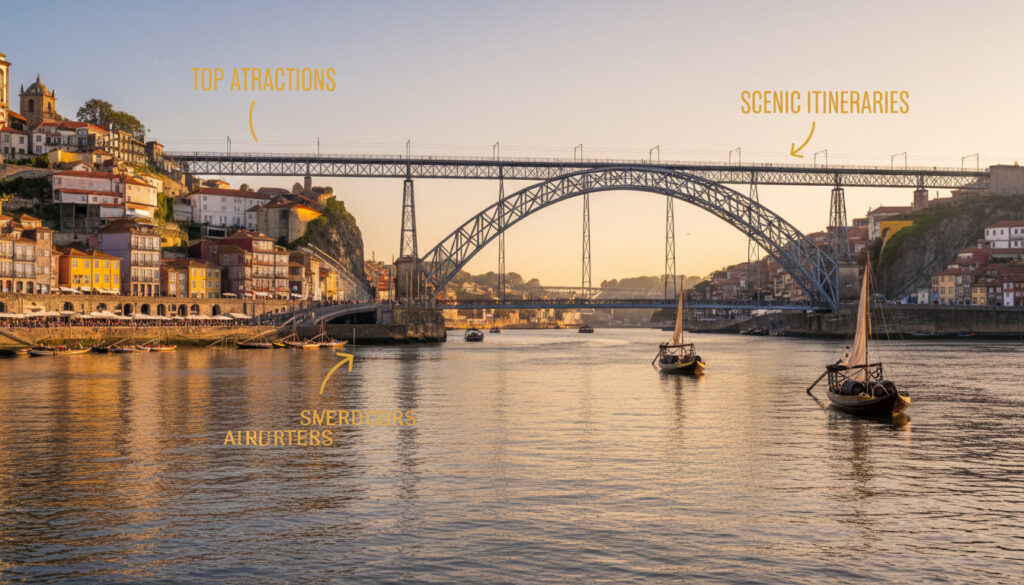
Things to Do in Porto – Top Attractions and Itineraries
Porto, Portugal’s second city, rises from the banks of the Douro River in a cascade of terracotta rooftops and baroque facades. This UNESCO World Heritage destination blends medieval alleyways with contemporary culture, offering visitors a dense concentration of historic landmarks, port wine cellars, and panoramic viewpoints within a compact, walkable center.
The city’s character reveals itself through azulejo-tiled churches, double-decker iron bridges, and the steady rhythm of Rabelo boats navigating the waterfront. Whether crossing the Dom Luís I Bridge at sunset or descending into centuries-old wine caves in Vila Nova de Gaia, travelers encounter layers of history interwoven with modern Portuguese life.
Top 10 Things to Do in Porto
Dom Luís I Bridge and Ribeira District
Vila Nova de Gaia Cellars
Livraria Lello and São Bento Station
Six-Bridges River Cruise
- Dom Luís I Bridge ranks as Tripadvisor’s #1 attraction, best experienced during sunset hours for optimal photography conditions and cooler temperatures.
- Torre dos Clérigos offers the most comprehensive 360-degree city views after a 225-step ascent, with combo tickets including the adjoining museum.
- Livraria Lello operates a strict timed-entry system requiring advance online reservations; same-day entry is typically unavailable during peak season.
- Ribeira District’s UNESCO-listed waterfront serves as the primary embarkation point for traditional Rabelo boat cruises along the Douro River.
- Port wine cellars in Vila Nova de Gaia provide complimentary tastings with tour purchases at historic establishments including Graham’s, Sandeman, and Taylor’s.
- São Bento Station houses over 20,000 azulejo tiles depicting Portuguese historical narratives across its entrance hall.
- The Church of St. Francis presents gilded Baroque interiors and accessible catacombs for visitors interested in ecclesiastical architecture.
| Attraction | Duration | Cost (2025) | Family-Friendly |
|---|---|---|---|
| Dom Luís I Bridge | 45-60 min | Free | Yes |
| Torre dos Clérigos | 60 min | €5-7 | No (steep stairs) |
| Ribeira District | 2-3 hours | Free | Yes |
| Livraria Lello | 45 min | Voucher system | Yes |
| São Bento Station | 30 min | Free | Yes |
| Church of St. Francis | 45 min | €7 | Yes |
| Six-Bridges Cruise | 50 min | €15-20 | Yes |
| Port Wine Cellars (Gaia) | 2 hours | €15-30 | No (alcohol focus) |
| Miradouro da Vitória | 30 min | Free | Yes |
| Palácio da Bolsa | 60 min | €10-15 | Yes |
The Dom Luís I Bridge dominates the cityscape as a double-decker iron structure designed by a Gustav Eiffel associate. Pedestrians can cross both levels, though the upper deck provides superior panoramic vistas connecting Porto to Vila Nova de Gaia. According to The Common Wanderer, afternoon light creates optimal conditions for photography from the upper span.
One-Day Itinerary: Things to Do in Porto for a Day
A compressed schedule requires strategic geographic clustering. Focus on the historic center and immediate riverside areas to maximize exposure to Porto’s essential character without excessive transit time.
Morning: Ribeira and São Bento
Begin at Cais da Ribeira, the waterfront promenade featuring medieval facades and café terraces. Walk the lower deck of Dom Luís I Bridge to experience the ironwork details and river proximity. Return to the Porto side and ascend to São Bento Railway Station to examine the tile panels depicting Portuguese monarchs and battle scenes.
Afternoon: Clérigos and Lello
Navigate to Torre dos Clérigos for midday views before the afternoon crowds converge. The 76-meter baroque tower requires navigating 240 narrow steps, but the 360-degree perspective justifies the exertion. Proceed to Livraria Lello, frequently cited as among the world’s most beautiful bookstores. The neo-Gothic interior features a stained-glass skylight and carved wood balustrades reminiscent of the Harry Potter Tour London – Best Studio and Walking Tours, as the author taught English in Porto and drew inspiration from local architecture.
Livraria Lello operates a timed-entry system. Tickets must be purchased online in advance, with entry windows strictly enforced to manage crowd flow and preserve the historic interior.
Evening: Gaia Sunset
Cross to Vila Nova de Gaia via the upper bridge deck. Visit Graham’s or Taylor’s port lodges for structured tastings of tawny and vintage varieties. Conclude at Jardim do Morro overlook to observe the sunset illuminating Porto’s riverside facades in golden light.
3-Day Porto Itinerary: What to Do in Porto for 3 Days
Extended visits permit deeper exploration of distinct neighborhoods, day trips, and culinary immersion beyond the historic core.
Day 1: Historic Center Immersion
Dedicate the first day to the Ribeira District and surrounding monuments. Include Palácio da Bolsa for guided tours of the neoclassical stock exchange and its ornate Arab Room. Visit the Porto Cathedral (Sé do Porto), a fortress-like Romanesque structure with cloisters decorated in azulejo tiles. Walk the Miradouro da Vitória for alternative perspectives of the cathedral and surrounding rooftops.
Day 2: Wine Culture and Foz
Morning hours suit detailed cellar tours at Sandeman or Porto Cruz Space, the latter offering interactive exhibits and a 360-degree terrace bar. Afternoon transit to Foz do Douro, where the river meets the Atlantic, provides coastal atmosphere distinct from the city center. The vintage tram line operates along this route for transportation with historic character.
Port wine cellar tastings require participants to be 18 years or older. Some facilities offer family tours focusing on history and production methods for visitors with children.
Day 3: Douro Valley or Local Markets
Option one involves a day trip to the Douro Valley wine region, accessible by train or river cruise, to observe terraced vineyards. Option two focuses on Mercado do Bolhão, the sensory municipal market for local cheeses, seafood, and produce, followed by exploration of the Church of St. Francis, where gilded woodcarvings cover every interior surface.
Family-Friendly: Things to Do in Porto with Kids
Porto accommodates younger travelers through tactile museums, accessible viewpoints, and maritime activities that minimize structured walking.
Interactive and Visual Attractions
São Bento Station functions as an open-air gallery where children can identify historical scenes in the blue-and-white tile panels. The Six-Bridges Douro River Cruise provides 50-minute excursions on traditional Rabelo boats without requiring sustained attention spans. The Porto cable car in Gaia offers aerial transport between the riverside and bridge level.
Culinary Education
Structured pastel de nata cooking classes engage children in custard tart preparation. Mercado do Bolhão exposes younger visitors to Portuguese food culture through sensory experiences of fresh produce and seafood displays.
Torre dos Clérigos requires climbing 225 narrow steps without elevator access, making it unsuitable for strollers and difficult for children under six. Families should consider Miradouro da Vitória as an alternative viewpoint accessible by gradual streets.
The FC Porto Stadium tour appeals to sports-inclined teenagers, offering access to locker rooms and pitch-side perspectives of the Dragon stadium.
Adventures for Young Adults: Things to Do in Porto for Young Adults
Porto’s emerging status as a cultural hub creates specific opportunities for travelers aged 18-35 seeking nightlife, street art, and social dining.
- 10:00 – Brunch in Bonfim: The Bonfim district offers café culture distinct from tourist centers, with specialty coffee shops serving breakfast until late morning.
- 12:00 – Street Art Circuit: Explore murals and graffiti installations throughout the city center, particularly around Rua de Miguel Bombarda, where contemporary galleries cluster.
- 14:00 – Porto Cruz Terrace: Visit the Porto Cruz Space for interactive exhibits on port wine production followed by cocktails on the 360-degree viewing terrace overlooking the Douro River.
- 16:00 – Gaia Cable Car: Ride the teleférico from the riverside to the Serra do Pilar monastery viewpoint for sunset photography opportunities.
- 19:00 – Francesinha Dinner: Sample the meat-heavy sandwich covered in beer sauce at traditional taverns, a rite of passage for visitors.
- 21:00 – Galerias de Paris: Navigate the bar street in the city center, where nightlife concentrates in narrow lanes filled with music venues and craft beer establishments.
Free and Unusual Things to Do in Porto
Budget-conscious travelers and those seeking alternative experiences can access significant portions of Porto’s charm without admission fees, though certain conditions apply.
- Dom Luís I Bridge pedestrian walkways
- São Bento Station tile viewing
- Miradouro da Vitória viewpoint
- Jardim do Morro park and sunset viewing
- Ribeira District waterfront wandering
- Exterior photography of Igreja do Carmo
- Church interiors vary; some request donations while others charge fixed fees
- Port wine tastings typically require tour purchase ($15-30)
- Livraria Lello requires voucher purchase (deductible from book purchases)
- Seasonal festivals may create temporary free access to paid monuments
Unusual activities include visiting the narrowest house in Porto, located between Igreja do Carmo and Igreja dos Carmelitas, measuring barely one meter wide. The Miradouro da Vitória provides sunset views despite surrounding abandoned structures, creating an urban exploration atmosphere rare in sanitized tourist zones.
The UNESCO Douro Waterfront and Port Wine Heritage
Porto’s inscription on the UNESCO World Heritage List recognizes the historic center’s urban fabric and its role as the birthplace of port wine production. The Ribeira District’s medieval layout remains largely intact, with buildings dating to the 15th century lining narrow alleys that descend to the Douro River.
The port wine trade shaped the city’s development, with lodges in Vila Nova de Gaia storing fortified wine shipped from the Douro Valley. This commercial heritage persists in the relationship between Porto and the upstream wine regions, maintained through centuries-old transport routes now used for tourism.
The azulejo tile tradition visible throughout São Bento Station and churches reflects Portugal’s ceramic heritage, with Porto serving as a preservation site for techniques dating to the 16th century.
Sources and Travel Attribution
The Dom Luís I Bridge represents Porto’s most iconic structure, particularly when photographed during the golden hour as the sun sets over the Ribeira District.
Climbing the Clérigos Tower requires navigating 225 to 240 narrow steps, but rewards visitors with unmatched 360-degree perspectives of red rooftops, the cathedral, and Gaia.
— Plan Pack Explore
Planning Your Porto Visit
Optimal visits occur during late spring or early autumn when temperatures moderate and tourist density decreases. Comfortable footwear proves essential given the steep cobblestone streets and staircases connecting the riverside to upper districts. Those exploring Valley of the Rocks – Exmoor’s Dramatic Natural Wonder after Portugal will find comparable dramatic topography, though Porto’s urban landscape offers distinct cultural density unmatched by natural formations.
Frequently Asked Questions
What do Reddit users recommend for things to do in Porto?
Reddit discussions emphasize walking the Dom Luís I Bridge at sunset, visiting Livraria Lello early morning, and exploring the less touristy Bonfim district. Users consistently recommend the Francesinha sandwich at local taverns rather than tourist restaurants.
What unusual things can you do in Porto?
Visit Porto’s narrowest house between the Carmo and Carmelitas churches, explore the abandoned-building backdrop at Miradouro da Vitória, or ride the vintage tram to Foz do Douro. The Porto Cruz Space offers interactive wine technology exhibits unlike traditional cellars.
How many days do I need in Porto?
One day covers the historic core including Ribeira and the bridge, while three days allows for Douro Valley day trips, detailed wine tastings, and exploration of Foz do Douro. Two days suits most first-time visitors seeking balanced coverage.
Is Porto suitable for young children?
Yes, particularly for the cable car, tram rides, and tile viewing at São Bento Station. Avoid Torre dos Clérigos with strollers due to narrow stairs. The river cruises and cooking classes engage children effectively.
What is the best free viewpoint in Porto?
Miradouro da Vitória offers expansive views of the Douro River, cathedral, and terracotta rooftops without admission fees. Jardim do Morro in Gaia provides equally impressive sunset perspectives across the river to Porto.
More related posts
 Three SIM Only Deals: Unlimited Data & Prepay in Ireland
 Mother-in-Law’s Tongue Plant: Care, Placement & Lifespan Guide
 Tessa Wyatt: Biography, Marriages, and TV Career
 Spider Solitaire – Rules, Strategies and Winning Tips
 Headache Back of Head – Causes, Relief and When to See a Doctor
 David Bailey Photographer: Biography, Style & Latest News
 Man United vs Athletic Bilbao: The Real Head-to-Head Stats
 ASEAN All-Stars vs Manchester United F.C. Lineups – Confirmed XIs, Tactics and Team News
