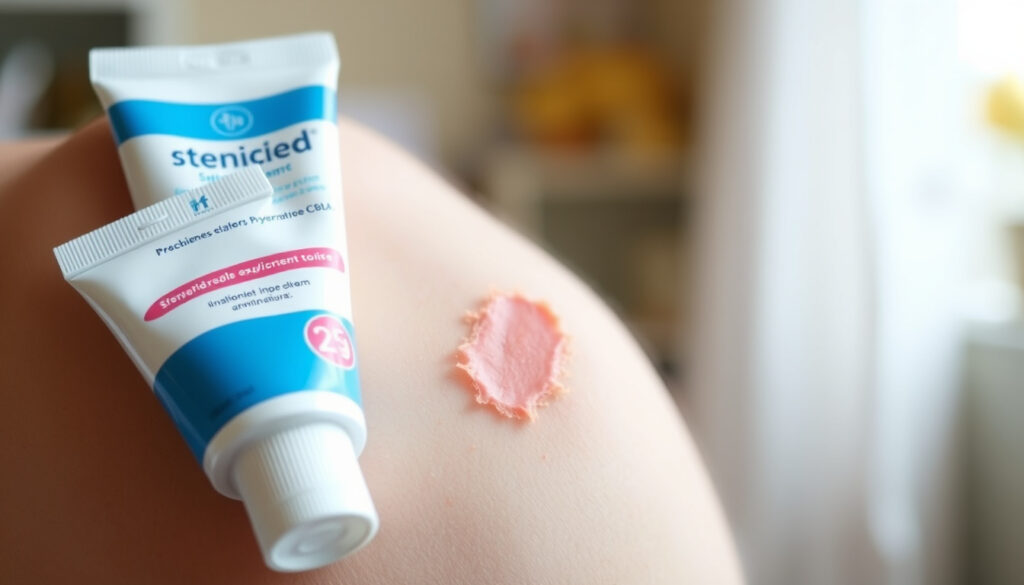
Steroid Cream for Eczema: Which One is Best & How to Use
Anyone who has spent a night scratching through the sheets knows the desperation eczema brings. About 1 in 5 children develop the condition, and for over 70 years topical steroids have been the first call for relief, but understanding potency classes, the 3-minute rule, and the vitamin D link is key to using them right.
Potency classes (UK): 7 (mild to very potent) · Most common OTC steroid: Hydrocortisone 1% · Children affected: 1 in 5 (20%) · Typical improvement time: 3–7 days
Quick snapshot
- Steroid creams reduce inflammation and itching in eczema (Eczema.org (patient charity))
- The 3-minute rule improves steroid absorption and efficacy (Eczema.org (patient charity))
- Which single steroid cream is best for all patients
- Long-term benefits of probiotic supplementation
- Safety of intermittent long-term potent steroid use
- Whether vitamin D supplementation directly treats eczema (observational only)
- For severe flares: no more than 2 weeks continuous use (Phoilex (specialist pharmacy resource))
- If no improvement in 7 days, consult a doctor (HSE (Irish health executive))
- Learn which potency class fits your eczema severity
- Master the 3-minute rule for application
- Check vitamin D levels if flares are frequent
Five facts that summarise the landscape at a glance:
| Eczema prevalence in children | 1 in 5 |
|---|---|
| Number of potency classes (UK) | 4 (mild to very potent) |
| Common OTC steroid | Hydrocortisone 1% |
| Typical flare resolution time | 3–7 days |
| Vitamin D deficiency association | Observational studies show correlation |
Which steroid cream is best for eczema?
The “best” steroid cream depends on your eczema severity, the body area affected, and your age. UK guidelines group topical steroids into four classes: mild, moderate, potent, and very potent. A stepped approach is standard: start with the weakest that controls the symptoms.
Understanding potency classes: mild, moderate, potent, very potent
- Mild – e.g., hydrocortisone 1%. Suitable for face, flexures, and children. (NHS (UK health authority))
- Moderate – e.g., clobetasone butyrate (Eumovate). Twice as potent as hydrocortisone 1%. (Eczema.org (patient charity))
- Potent – e.g., betamethasone valerate (Betnovate). 10 times more potent than hydrocortisone 1%. (Eczema.org (patient charity))
- Very potent – e.g., clobetasol propionate (Dermovate). At least 50 times more potent than hydrocortisone 1%. (Eczema.org (patient charity))
The potency is measured by the vasoconstriction assay – the stronger the steroid, the more it narrows blood vessels. (Eczema.org (patient charity))
Factors that determine the ‘best’ steroid cream: severity, location, age
- Severity: Mild eczema responds to mild steroids; moderate to severe flares need potent or very potent for short bursts.
- Location: Thin skin (face, groin) needs mild steroids; thick skin (palms, soles) may need potent.
- Age: Children require lower potencies; infants rarely get more than a mild steroid.
The HSE (Irish health executive) advises: “Use the least potent steroid that controls your eczema.” Overuse of potent steroids can thin the skin.
Comparing common steroids: hydrocortisone, betamethasone, clobetasol
Three steroids, three potency levels – one pattern: stronger formulations carry higher risk.
| Steroid | Potency class (UK) | Common brand(s) | Typical use |
|---|---|---|---|
| Hydrocortisone 1% | Mild | Derma Care, HC45 | Mild eczema, face, short-term OTC |
| Betamethasone valerate 0.1% | Potent | Betnovate | Moderate to severe flares (prescription) |
| Clobetasol propionate 0.05% | Very potent | Dermovate | Resistant eczema (short course only) |
The implication: a single “best” cream doesn’t exist. The choice hinges on individual flare severity and body site. Potent steroids work faster but must be reserved for short-term rescue.
For everyday mild eczema, hydrocortisone 1% OTC is the practical start. For flares that don’t settle in a week, a potent steroid like Betnovate under a doctor’s guidance becomes the sensible next step.
What are the steroid creams for eczema?
Dozens of formulations exist, but they fall into a clear potency ladder. Here are the most common ones, from mild to very potent.
List of common topical steroids by potency
- Mild: Hydrocortisone 0.5–1% (e.g., Derma Care) – OTC.
- Moderate: Clobetasone butyrate 0.05% (Eumovate) – prescription.
- Potent: Betamethasone valerate 0.1% (Betnovate), Fluticasone propionate 0.05% (Cutivate) – prescription.
- Very potent: Clobetasol propionate 0.05% (Dermovate) – prescription only.
In the US, these are mapped to a 7-class system where Class I (super-potent) includes clobetasol, and Class VII (least potent) is hydrocortisone 0.5%. (GoodRx (medication reference))
Brand names and generic names
- Hydrocortisone → Derma Care, HC45, generic
- Clobetasone butyrate → Eumovate
- Betamethasone valerate → Betnovate, generic
- Clobetasol propionate → Dermovate, generic
Over-the-counter vs prescription
Only mild steroids are available OTC (e.g., hydrocortisone 1%) for short-term use – usually up to 7 days. All moderate or stronger steroids require a prescription. (NHS (UK health authority)) The catch: OTC products are suitable for small areas only. Widespread eczema or flares that persist need medical advice.
What is the 3 minute rule for eczema?
A simple timing technique that maximises steroid effect while minimising waste. The rule originates from dermatology practice and is endorsed by the National Eczema Society (UK patient organisation).
Who developed the 3-minute rule?
The National Eczema Society popularised the rule as part of its treatment guidance. It’s based on the principle that emollients need time to absorb before a steroid is applied, preventing dilution.
How to apply the rule: wait after applying moisturizer
- First, apply your emollient (moisturiser) liberally.
- Wait 3 minutes.
- Then apply the steroid cream or ointment in a thin layer only to active eczema patches.
The National Eczema Society states this reduces steroid dilution and keeps the medication where it’s needed.
Why it works: absorption and efficacy
Emollients create a barrier; if you layer steroid immediately, it mixes with the moisturiser and spreads over healthy skin, losing potency. A 3-minute gap allows the moisturiser to sink in, leaving the steroid to penetrate the inflamed spots.
Skipping the 3-minute wait can halve the steroid’s effectiveness, meaning a patient uses a stronger cream longer than needed. The rule is free, takes no extra product, and directly reduces the risk of overusing potent steroids.
The pattern: a simple waiting period can significantly improve treatment outcomes.
What clears up eczema quickly?
When a flare is intense, you want relief fast. Short bursts of potent steroids, combined with good skin care, can turn the corner in 3–7 days.
Short-term flare management with potent steroids
For acute flares, many guidelines recommend a potent or very potent steroid for no more than 2 weeks continuously. (Phoilex (specialist pharmacy resource)) Typically, improvement is visible within 3 days.
Role of wet wraps and occlusion
Wet wrap therapy – applying a wet cotton layer over the steroid – boosts absorption and can rapidly calm severe eczema. This technique should only be done under medical supervision. (Eczema.org (patient charity))
Combination with emollients and antihistamines
- Emollients: applied before the steroid (3-minute rule).
- Antihistamines: oral antihistamines help control itching, especially at night.
The pattern: rapid relief comes from a short, focused course of potent steroid plus supportive care – not from a single miracle cream.
Potent steroids clear flares fast, but they mustn’t be used for more than a few weeks. A 2-week max rule protects the skin from thinning and systemic side effects.
The catch: fast relief requires careful adherence to duration limits.
What is the body lacking with eczema?
Eczema is complex, but nutrient status plays a role. The strongest evidence points to vitamin D.
Vitamin D deficiency and eczema
Observational studies show that lower vitamin D levels are associated with higher eczema risk and severity. The NHS (UK health authority) notes that supplementation may improve symptoms in some people, but the evidence isn’t conclusive.
Role of fatty acids and probiotics
- Omega-3 fatty acids: modest anti-inflammatory effects.
- Probiotics: mixed evidence; long-term benefits remain unclear.
Does supplementation help?
For vitamin D, a 2018 meta-analysis found that supplementation reduced eczema severity scores compared with placebo. However, no single deficiency causes eczema – it’s a multifactorial condition involving genetics, skin barrier function, and immune response.
If you have frequent flares, it’s worth asking your GP to check your vitamin D level. If low, supplementing is safe and may help, but don’t expect it to replace topical treatment.
Pros and cons of steroid cream for eczema
Upsides
- Highly effective at reducing inflammation and itching
- Work quickly – improvement often within 3–7 days
- Available OTC for mild cases (hydrocortisone)
- Safe when used correctly for short periods
Downsides
- Skin thinning (atrophy) with long-term potent use
- Stretch marks (striae) in flexural areas
- Rebound effect if stopped abruptly
- Not suitable for infected skin without medical guidance
The trade-off: short-term gains against long-term risks means using the least potent effective option.
How to apply steroid cream for eczema – step by step
- Wash hands and cleanse the affected area gently.
- Apply emollient (moisturiser) to all dry skin.
- Wait 3 minutes – this is the 3-minute rule.
- Squeeze a small amount – about the size of your fingertip unit (FTU) covers an area twice the size of your palm.
- Rub in gently on active eczema patches only, in the direction of hair growth.
- Use once or twice daily depending on potency and doctor’s advice.
- Stop when the flare clears, or after 7 days maximum for potent steroids without medical review.
The routine: precision in application is as important as the choice of cream.
Specification table – steroid cream formulations
Thirteen common formulations, one pattern: the vehicle (cream vs ointment) alters potency as much as the drug itself.
| Drug | Vehicle | UK potency class | Availability |
|---|---|---|---|
| Hydrocortisone 0.5% | Cream | Mild | OTC |
| Hydrocortisone 1% | Cream | Mild | OTC |
| Hydrocortisone 1% | Ointment | Mild–moderate | OTC |
| Clobetasone butyrate 0.05% | Cream | Moderate | Prescription |
| Clobetasone butyrate 0.05% | Ointment | Moderate | Prescription |
| Betamethasone valerate 0.1% | Cream | Potent | Prescription |
| Betamethasone valerate 0.1% | Ointment | Potent | Prescription |
| Fluticasone propionate 0.05% | Cream | Potent | Prescription |
| Fluticasone propionate 0.05% | Ointment | Very potent | Prescription |
| Clobetasol propionate 0.05% | Cream | Very potent | Prescription |
| Clobetasol propionate 0.05% | Ointment | Very potent | Prescription |
| Clobetasol propionate 0.05% | Foam/shampoo | Very potent | Prescription |
The takeaway: ointments are the most potent vehicle and should be matched to the severity. A Class I steroid in ointment form can be up to 50× stronger than hydrocortisone cream.
Expert insights – what leading health bodies say
“The 3-minute rule – apply emollient, wait 3 minutes, then apply topical steroid – helps maximise effectiveness without increasing side effects.”
National Eczema Society (UK patient organisation)
“Start with the least potent steroid that controls your eczema. If mild steroids don’t work after 7 days, see your GP.”
Health Service Executive (Irish health executive)
“Hydrocortisone is suitable for mild eczema but stronger steroids need a prescription. Do not use potent steroids on the face or for more than 7 days without medical advice.”
NHS (UK health authority)
The consensus: authoritative bodies agree on a stepped, cautious approach.
Summary – making the right choice for your skin
Steroid creams remain the most reliable short-term tool for eczema flares, provided you match the potency to the severity and stick to application rules. The 3-minute rule costs nothing and can reduce the need for stronger creams. A growing body of evidence suggests that checking vitamin D status might help break the cycle of repeated flares.
For the person dealing with persistent eczema, the choice is clear: apply with precision, monitor your response, and see a doctor if improvement stalls – or accept the risk of skin damage from the wrong potency.
wwl.nhs.uk, psoriasis.org, primarycare.northeastlondon.icb.nhs.uk, ncbi.nlm.nih.gov, mcgill.ca
Frequently asked questions
Can I use steroid cream on my face?
Only mild steroids like hydrocortisone are safe for short-term use on the face. Stronger steroids can cause thinning, rosacea, and perioral dermatitis. Always consult a doctor before applying any steroid to facial skin. (NHS (UK health authority))
How often should I apply steroid cream?
Typically once or twice daily. Apply only to active eczema, not to healthy skin. Overuse increases side effects. For potent steroids, once daily is often enough. (Eczema.org (patient charity))
Can steroid cream make eczema worse?
In rare cases, prolonged or inappropriate use can lead to topical steroid withdrawal (red, burning skin) or rebound flare-ups. This is more common with potent steroids used daily for months. Always taper use under medical supervision.
What should I do if steroid cream stops working?
It may mean the eczema has become resistant, the potency is too low, or there is an infection. See your doctor for reassessment. Do not simply switch to a stronger cream without advice.
Is it safe to use steroid cream during pregnancy?
Mild to moderate topical steroids are generally considered safe during pregnancy when used short-term. Very potent steroids should be avoided. Always discuss with your obstetrician or GP. (HSE (Irish health executive))
Can babies have steroid cream?
Yes, but only under a doctor’s supervision. Mild steroids (e.g., hydrocortisone 1%) are sometimes used for short periods. Use the least potent effective option and avoid the nappy area unless directed. (NHS (UK health authority))
How do I taper off steroid cream?
Reduce frequency rather than strength – for example, from twice daily to once daily, then to every other day for a few days, then stop. Tapering helps prevent rebound flaring. Your doctor can provide a specific schedule.
What is the difference between a cream and an ointment formulation?
Creams are lighter, less greasy, and preferred for daytime use. Ointments are greasier but have higher penetration and potency. The same drug in ointment form can be one class stronger than the cream. Choose ointment for thicker skin or more severe flares.
For further reading, see How to Get Rid of a Cold Sore in 24 Hours – Proven Relief Methods and Hand, Foot and Mouth Disease Symptoms – First Signs and Stages.
More related posts
 Morgan Kohan: Age, Height, Relationship, and Why She Wears a Wig
 Poundland Is Closing Over 100 Stores By Next Year – 2026 Closures List
 Honor Magic 7 Pro Review: Specs, Camera & Ireland Price
 Mens Quarter Zip Jumper – Styles, Sizing & Buying Guide
 Prince Edward, Duke of Edinburgh: Life, Family & Role
 Most Liked Instagram Post – Messi’s World Cup Record Tops All
 ASEAN All-Stars vs Manchester United F.C. Lineups – Confirmed XIs, Tactics and Team News
 Plus Size Wedding Dresses – Best UK Shipping Options
