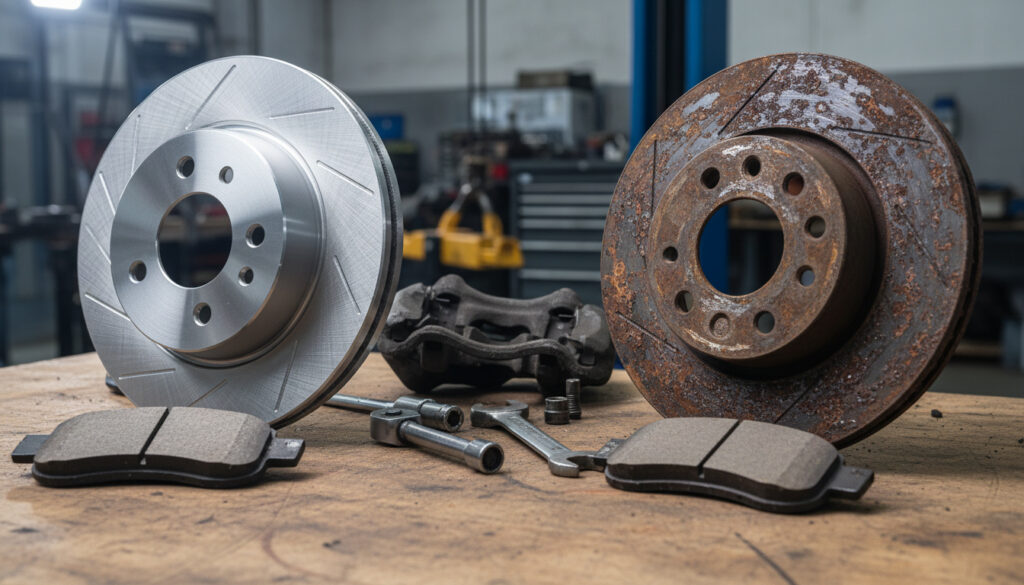
Brake Pads and Discs – Types, Lifespan and Replacement Guide
Brake pads and discs form the critical friction partnership that brings your vehicle to a stop. Understanding their materials, lifespans, and replacement indicators ensures safe driving and optimal performance across varying conditions.
These components face extreme heat, pressure, and environmental conditions daily. Material choices directly impact stopping distance, noise levels, and maintenance costs, making informed selection essential for both safety and economy.
This guide examines the science behind brake friction materials, replacement timelines, and cost considerations based on technical specifications and industry data. For official safety standards, consult the National Highway Traffic Safety Administration brake equipment guidelines.
How Do I Know When Brake Pads and Discs Need Replacing?
Types
Organic, Semi-Metallic, Ceramic
Lifespan
Pads 30-70k miles, Discs 50-100k
Cost
Pads $50-150, Discs $100-300
Replacement
DIY possible, 1-2 hours
Key Insights
- Organic pads wear fastest but protect rotors from abrasion
- Semi-metallic pads handle extreme heat better than other types
- Ceramic pads produce minimal visible dust on wheels
- Cast iron rotors remain the standard for most passenger vehicles
- Slotted rotor designs excel in endurance racing applications
- Regular inspection prevents metal-on-metal contact damage
| Component | Material Options | Avg Lifespan | Signs of Wear |
|---|---|---|---|
| Organic Pads | Rubber, glass, carbon, resins | 20,000-40,000 miles | Squealing, reduced response, thinning |
| Semi-Metallic Pads | Steel, iron, copper, graphite | 40,000-70,000 miles | Grinding, dark dust, longer stops |
| Ceramic Pads | Ceramic fibers, non-ferrous metals | 50,000-70,000 miles | Reduced bite, light dust accumulation |
| Cast Iron Discs | Gray iron, carbon additions | 50,000-100,000 miles | Vibration, scoring, thickness variation |
| High Carbon Discs | Iron-carbon alloy | 60,000-100,000 miles | Cracking resistance, heat spots |
| Steel Rotors | Stainless steel alloys | 30,000-60,000 miles | Warping, pulsating pedal, noise |
What Are the Different Types of Brake Pads and Discs?
Brake Pad Materials
Organic brake pads consist of rubber, glass, carbon compounds, and resins bonded together. They come standard on approximately 67% of new vehicles sold in the United States according to Bridgestone tire maintenance research. These pads offer excellent quiet operation and remain gentle on brake rotors, making them ideal for light vehicles and daily commuting. However, they wear out relatively quickly, tend to be dusty, and perform poorly under high heat conditions, rendering them unsuitable for heavy or performance vehicles.
Semi-metallic brake pads contain 30% to 70% metal content, including steel, iron, copper, and composite alloys, mixed with graphite lubricant and fillers. They function as the workhorses of brake systems, offering excellent durability and thermal conductivity that allows them to handle very high temperatures according to NRS Brakes technical analysis. This makes them ideal for heavy trucks, SUVs, and performance cars. The trade-off includes increased noise levels, significant dark brake dust production, and greater wear on brake rotors due to their abrasive nature.
Ceramic brake pads are made from dense ceramic fibers and non-ferrous metals bonded with resins. Developed in the mid-1980s, they have gained popularity for their extremely quiet operation and fine light-colored dust that does not stick to wheels. They remain stable across a wide temperature range for consistent performance and prove less abrasive to rotors. Their higher initial cost and reduced effectiveness in extreme cold or racing conditions represent their primary limitations.
Hybrid ceramic pads with added metallic fiber offer better stopping power than standard ceramic pads while producing less noise and dust than semi-metallics. Additional materials like carbon fiber and aramid fabrics (Kevlar®) can improve heat resistance, service life, and friction performance across all pad categories according to Summit Racing technical documentation.
Brake Disc Materials
Cast iron rotors represent the most common type available according to Spring Works Auto technical specifications. They can be configured as one or two-piece parts and work in most vehicles, though high-performance vehicles require two-piece cast iron rotors. Their primary disadvantage involves weight, as they are the heaviest option, potentially impacting vehicle handling by adding unsprung mass at the front wheels.
High carbon rotors contain iron with carbon mixed in. The metallic content prevents cracking, reduces vibrations and noise, and allows these rotors to withstand and dissipate heat quickly. They command higher prices than standard cast iron rotors.
Steel rotors are significantly lighter and thinner than cast iron rotors and handle heat better, making them traditionally popular with racers. The primary downside involves reduced durability—warped steel rotors can cause loud noise and pulsating brake pedal feel.
Aluminum rotors are lightweight but melt at lower temperatures than other rotor materials. They are typically found on motorcycles rather than cars, trucks, and SUVs, since motorcycles weigh less and create less braking heat.
Ceramic rotors have the highest heat capacity of all rotor types and are found on high-end luxury and performance vehicles like Ferrari and Porsche. They maintain consistent braking force and pressure as temperature rises, provide lightweight construction compared to iron and steel, and deliver smooth, high-performance braking. Their primary limitation is expense.
Rotor Design Patterns
Blank rotors are smooth with no surface patterns. They are the longest-lasting overall option, produce very little dust, and are quiet to operate according to R1 Concepts engineering data. Their plain nature means few cracks can develop, making them durable and an inexpensive choice.
Slotted rotors have slots cut into the surface. These slots shave down glaze from overheated brake pads and expose fresh material with each brake application. This design improves consistency with every stop by reducing friction in the brake pads and is effective for heavy-duty vehicles. Slotted rotors are a top choice for endurance racing.
For daily commuting in light vehicles, organic or ceramic pads paired with blank cast iron rotors offer optimal value. Heavy trucks and performance vehicles benefit from semi-metallic pads with high carbon or slotted rotors. Racing applications typically require steel or ceramic rotors with semi-metallic or specialized racing pads.
How Much Does It Cost to Replace Brake Pads and Discs?
Brake Pad Pricing Tiers
Semi-metallic pads are typically the most budget-friendly option available. Ceramic pads command a higher price due to their advanced materials and manufacturing process, making them the most expensive option. Organic pads fall at the lower end of the price spectrum, though their shorter lifespan may increase long-term costs.
Brake Disc Investment
Standard cast iron rotors represent the baseline cost option. High carbon rotors demand premium pricing due to their enhanced thermal properties and crack resistance. Ceramic rotors, found on luxury performance vehicles, represent the highest investment tier, often costing significantly more than iron alternatives.
Professional Service vs DIY
Professional replacement typically includes labor charges that vary by region and vehicle complexity. DIY replacement is possible for those with mechanical aptitude, requiring approximately one to two hours per axle. The process demands proper tools, torque specifications, and safety procedures to ensure optimal performance.
Always replace brake pads in axle pairs to prevent uneven braking. Never mix pad types on the same axle. Proper bedding-in procedures are essential for optimal performance and longevity of new components.
What Are the Best Brake Pads and Discs Brands?
Comprehensive independent brand comparisons are not available in current technical literature. Selection should prioritize material composition and vehicle specifications over brand recognition.
When evaluating options, consider the BMW 4 Series Gran Coupe – 2025 Specs, Price and Comparisons as an example of how high-performance vehicles require specific brake specifications. Manufacturers specializing in high-performance applications focus on thermal management, while standard OEM suppliers prioritize daily driving comfort and longevity.
Vehicle-specific requirements, driving conditions, and manufacturer recommendations should guide selection more than brand marketing. Compatibility with existing brake systems and proper fitment remain more critical than brand name for safety and performance.
How Long Do Brake Pads and Discs Last?
-
Components arrive at full thickness with optimal friction surfaces. Performance is at peak capability.
-
Inspect pad thickness. Organic pads may require replacement. Discs should show minimal wear.
-
Check disc runout and remaining pad material. Semi-metallic and ceramic pads may still have substantial life.
-
Ceramic and semi-metallic pads approaching replacement limits. Discs may need resurfacing or replacement if below minimum thickness.
-
Most cast iron discs require replacement. High carbon or ceramic discs may extend beyond this interval with proper care.
Do Brake Pads and Discs Need to Be Replaced Together?
Established Facts
- Brake discs typically outlast pads by a factor of two to three
- Replace pads in axle pairs to maintain balanced braking
- Uneven wear indicates caliper or system issues requiring inspection
- Resurfacing discs is possible if above minimum thickness specifications
Uncertain Variables
- Exact mileage intervals vary significantly by driving style and environment
- Brand compatibility requirements between pads and discs remain unclear
- Specific vehicle model recommendations require manufacturer consultation
- Warping prevention techniques show variable effectiveness
What Causes Brake Discs to Warp?
Thermal cycling represents the primary cause of brake disc distortion. Repeated heating and rapid cooling—such as driving through puddles after heavy braking—creates stress fractures and thickness variations. Improper lug nut torque during wheel installation can also induce warping by creating uneven clamping forces.
Material composition affects susceptibility. Steel rotors warp more easily than cast iron due to their thinner construction and different thermal expansion properties. High carbon rotors resist cracking better but can still develop thickness variations under extreme stress.
Driving habits significantly impact disc longevity. Riding the brakes downhill, frequent hard stops, and immediate cooling after high-speed driving accelerate wear patterns. The Tube Strike London 2025 – Dates, Lines and Alternatives illustrates how stop-and-go traffic patterns in urban environments increase brake system stress and heat buildup.
What Do Brake Experts Recommend?
The science of friction demonstrates that different brake pad materials affect stopping power through varying coefficients of friction and thermal management capabilities. Semi-metallic compounds offer superior heat dissipation for demanding applications.
— NRS Brakes Technical Analysis
Ceramic brake pads developed in the mid-1980s provide stable performance across wide temperature ranges while producing minimal dust, though they may not perform optimally in extreme cold or racing conditions.
— Bridgestone Tire Maintenance Research
Slotted rotors improve consistency with every stop by reducing friction in the brake pads and shaving down glaze from overheated materials, making them effective for heavy-duty vehicles and endurance racing.
— R1 Concepts Engineering
What Should You Remember About Brake Maintenance?
Selecting appropriate brake materials requires balancing performance needs against cost and durability. Semi-metallic pads suit heavy vehicles and extreme conditions, while ceramic options excel in daily driving with minimal dust. Cast iron rotors remain the practical standard, with high carbon and ceramic alternatives available for specialized applications. Regular inspection at 30,000-mile intervals prevents unsafe wear conditions and costly system damage.
Frequently Asked Questions
What causes brake discs to warp?
Thermal cycling from repeated heating and rapid cooling creates stress fractures. Improper lug nut torque and aggressive driving habits also contribute to thickness variations and distortion.
Are slotted brake discs better?
Slotted rotors excel in endurance racing and heavy-duty applications by shaving glaze from overheated pads. For standard daily driving, blank rotors offer quieter operation and longer service life.
Can I replace brake pads and discs myself?
DIY replacement is possible with proper tools, torque specifications, and mechanical aptitude. The process requires approximately one to two hours per axle and strict adherence to safety procedures.
What is the difference between ceramic and semi-metallic brake pads?
Ceramic pads offer quiet operation with light dust but cost more and handle extreme cold poorly. Semi-metallic pads manage heat better and cost less but produce more noise and dark dust.
Do brake pads and discs need to be replaced together?
Discs typically outlast pads by two to three replacement cycles. Replace discs only when below minimum thickness or when warping occurs, not automatically with every pad change.
How do I know when my brake pads need replacing?
Listen for squealing or grinding noises, feel for pulsating pedals, and watch for reduced stopping response. Visual inspection revealing less than 3mm of material indicates replacement necessity.
More related posts
 Daisy May Cooper Husband: Ex Will Weston, 2021 Split
 Leicester City vs Coventry – M69 Derby Head-to-Head Stats
 Manchester City 115 Charges: Status and Latest News
 The Fantastic Four First Steps – Release Date, Cast, Box Office
 Elden Ring DLC Release Date: Complete Timeline (2024-2025)
 Martin Freeman: Biography, Relationships, Movies, and Net Worth
 Believe Me: The Abduction of Lisa McVey – Where to Watch Online
 Sri Lanka vs England Cricket Timeline: Fixtures, History & Results
