How to Help Constipation: Fast Relief and Home Remedies
Anyone who’s spent an uncomfortable morning on the toilet knows the feeling: you’re ready to go, but nothing happens. This guide lays out evidence-based strategies — from what you eat to how you sit — so you can get back to your day without the drama.
Adults affected by constipation worldwide: 16% ·
Daily fiber recommendation: 25–38 grams ·
Normal bowel movement range: 3 times per week to 3 times per day ·
Effectiveness of prune juice: Mild natural laxative, often effective within 30 minutes
Quick snapshot
- Increase fiber to 25–38 g/day from whole grains, fruits, and vegetables (Harvard Health)
- Eat prunes or dried fruits as a natural laxative (Hamilton Gastroenterology Group)
- Limit processed foods and low-fiber snacks (Harvard Health)
- Drink 8–10 cups of water daily (Temple Health)
- Warm liquids like tea or hot water stimulate the digestive system (Temple Health)
- Avoid excessive alcohol and caffeinated drinks (Temple Health)
- Light walking after meals aids peristalsis (Healthline)
- Yoga poses like twists can stimulate the colon (Healthline)
- Regular moderate exercise reduces constipation risk (Healthline)
- Use a footstool to align the rectum in a squatting position (Temple Health)
- Do not ignore the urge to have a bowel movement (Harvard Health)
- Allocate time for a relaxed bathroom visit (Temple Health)
Six key facts, one pattern: constipation treatment breaks into prevalence, fiber intake, water consumption, and stool quality. Here’s the data at a glance.
| Metric | Value |
|---|---|
| Prevalence | 16% of adults globally; up to 33% in those over 60 (Harvard Health) |
| Fiber intake | 25 g/day for women, 38 g/day for men (Harvard Health) |
| Water intake | 1.5–2 liters per day (about 8 cups) (Temple Health) |
| Ideal stool consistency | Bristol Stool Type 3 (sausage with cracks) or Type 4 (smooth sausage) |
| Daily fiber recommendation for adults | 21–38 grams depending on age and sex (Harvard Health) |
| Effectiveness of prune juice | Mild natural laxative due to sorbitol content (Hamilton Gastroenterology Group) |
How do you relieve constipation quickly?
How do I get unconstipated asap?
- Drink a glass of warm water to stimulate digestive movement (Temple Health)
- Caffeine may act as a mild stimulant — coffee or black tea can trigger the gastrocolic reflex (Temple Health)
- Prune juice is a proven natural laxative; half a cup often works within 30–60 minutes (Hamilton Gastroenterology Group)
- Avoid delaying bathroom trips — when you feel the urge, go (Harvard Health)
- Light exercise like a 10-minute walk can encourage bowel movement (Healthline)
How to clear constipation in 30 minutes?
- Drink a hot beverage — coffee or herbal tea — to stimulate the gastrocolic reflex (Temple Health)
- Try 4–8 ounces of prune juice warmed slightly (Hamilton Gastroenterology Group)
- Use a footstool to bring knees above hips — this straightens the rectal angle (Temple Health)
- Gently massage your abdomen in clockwise circles for 5–10 minutes (Temple Health)
The implication: quick relief doesn’t require harsh chemicals. In most cases, the body responds to simple physical cues — warmth, gravity, and a bit of fiber.
What simple trick empties bowels immediately?
What is the 7 second poop trick?
The “7 second poop trick” involves a specific squatting posture combined with gentle abdominal pressure. While not a formally studied medical protocol, the mechanics are grounded in anatomy.
- Sit on the toilet with a footstool under your feet, raising your knees above your hips (Temple Health)
- Lean slightly forward, resting elbows on knees
- Take a deep breath and gently bear down — do not strain hard
- Repeat for up to 7 seconds; stop if you feel pain
A mixture of lemon juice (1 tablespoon) and olive oil (1 tablespoon) is sometimes suggested to trigger a bowel movement quickly, though the evidence is anecdotal rather than clinical.
The 7 second trick works by aligning the rectum in a squatting angle, but forceful straining can cause hemorrhoids or tear tissue. If you feel sharp pain, stop immediately. For most adults with simple constipation, gentle posture beats brute force.
The catch: the “7 second” claim is popular online but lacks clinical trials. What is backed by evidence — the footstool technique — is the real mechanism at work.
What is the 3 and 3 rule for poop?
How often should you poop?
The “3 and 3 rule” is a heuristic some dietitians use to describe an ideal bowel pattern: eat three meals a day, and expect a bowel movement within three hours of waking. While not a formal medical guideline, it reflects how the gastrocolic reflex works after meals.
- “3 and 3 rule”: eat three meals, have a bowel movement within three hours of waking
- Normal frequency ranges from three times per week to three times per day (Harvard Health)
- Consistency should be Type 3 (sausage with cracks) or Type 4 (smooth sausage) on the Bristol Stool Scale (Temple Health)
Why this matters: many people worry they’re irregular when their pattern is actually normal. If you’re in the 3-times-per-week to 3-times-per-day range and your stool is soft-formed, you’re likely fine.
How can I stimulate my bowels to poop?
What causes constipation?
- Low fiber intake: Not enough fruits, vegetables, and whole grains (Harvard Health)
- Dehydration: Inadequate water intake makes stool hard and dry (Temple Health)
- Medication side effects: Opioids, some antidepressants, and iron supplements slow transit
- Lack of exercise: Sedentary lifestyle reduces colonic motility (Healthline)
- Ignoring the urge: Suppressing the signal trains the bowel to stop signaling (Harvard Health)
Stimulation techniques
- Abdominal massage: Using your fingertips, massage your lower belly in clockwise circles for 10 minutes, 30–60 minutes after a meal (Temple Health)
- Regular exercise like walking, swimming, or yoga promotes bowel function (Healthline)
- Use the bathroom at the same time every day — ideally 15–45 minutes after a meal (Temple Health)
- Try the “nurse’s cocktail”: 1 cup prune juice, 1 tablespoon warm milk, and 1 pat of butter — stir and drink
Most people with persistent constipation point to a single root cause: ignoring the urge combined with low fiber. For those patients, addressing the cause — not just the symptom — breaks the cycle. Temple Health suggests retraining the bowel by sitting at the same time daily, regardless of urge.
The trade-off: stimulant laxatives like senna work by irritating the bowel lining, which can cause cramping and dependence if used daily. For most adults, physical stimulation methods are safer and equally effective for simple constipation.
What foods help with constipation immediately?
What is the nurse’s cocktail for constipation?
The “nurse’s cocktail” is a home remedy commonly shared among nursing staff and patient forums. It combines prune juice, warm milk, and a small amount of butter or margarine. The reasoning: prune juice provides sorbitol (a natural laxative), warm milk relaxes the digestive tract, and fat stimulates the gallbladder and digestive contractions.
- 1 cup prune juice (provides sorbitol, a natural sugar alcohol laxative) (Hamilton Gastroenterology Group)
- 1 tablespoon warm milk (helps relax the digestive tract)
- 1 pat of butter or margarine (fat triggers gallbladder contraction)
- Stir and drink on an empty stomach; effects may appear within 30–60 minutes
Best high-fiber foods for immediate relief
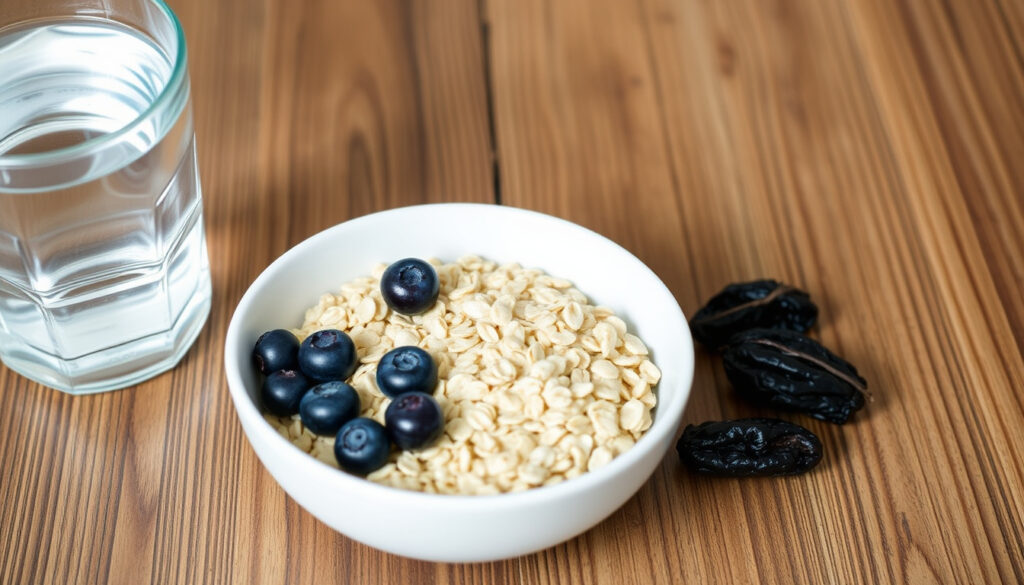
- Prunes and prune juice: High in sorbitol and fiber (Hamilton Gastroenterology Group)
- Pears: Rich in fiber and fructose
- Apples: Pectin in apples pulls water into the bowel (GoodRx)
- Kiwi: Contains actinidin, an enzyme that may speed transit
- Oats and whole grains: Insoluble fiber bulks stool
- Beans and lentils: High fiber and resistant starch
Avoid foods that can worsen constipation: bananas (especially unripe), cheese and dairy, processed foods, and red meat. These can slow digestion and harden stool.
The pattern: the most effective immediate foods share one feature — they pull water into the bowel or stimulate the gastrocolic reflex. That’s why prunes, pears, and hot liquids work faster than simply adding bran to your diet.
Confirmed facts and what’s still unclear
Confirmed facts
- Prune juice helps relieve constipation (Hamilton Gastroenterology Group)
- Increasing fiber and water is effective (Harvard Health)
- Physical activity stimulates bowel movement (Healthline)
- Using a footstool improves toilet posture (Temple Health)
- Hot beverages trigger the gastrocolic reflex (Temple Health)
What’s unclear
- Effectiveness of apple cider vinegar for constipation (anecdotal only)
- Role of probiotics in chronic constipation (mixed studies)
- Optimal timing of laxative use for acute relief (varies by product)
Quotes from trusted sources
“Many people find that drinking a hot beverage shortly after waking stimulates digestion and helps get things moving.”
— Temple Health (academic medical center)
“Increasing your intake of dietary fiber and fluids, and improving your toilet routine, are the first steps to relieving constipation.”
— Harvard Health (university medical publishing)
“Prune juice and olive oil are natural remedies that can help. Light exercise after meals also supports bowel function.”
— Temple Health (academic medical center)
“Avoid alcohol, increase fiber, and drink plenty of fluids to prevent and treat constipation.”
— Temple Health (academic medical center)
For the person sitting at home with an uncomfortable stomach, the choice is clear: start with prune juice and a hot drink, correct your toilet posture with a footstool, and if you’ve been ignoring the urge, start listening. Those three steps alone will resolve most episodes of simple constipation. If symptoms persist beyond two weeks, or if you experience severe pain, blood in stool, or unintended weight loss, see a doctor — constipation is treatable, but it should never be ignored. Temple Health advises consulting a doctor if symptoms persist beyond two weeks.
medicalnewstoday.com, vibrantgastro.com, youtube.com, colondigestive.com
For a trusted guide on fast, effective home treatments, you can explore evidence-based constipation relief from a reputable source.
Frequently asked questions
Can constipation cause severe pain?
Yes. Hard stool stretching the colon walls can cause cramping and sharp pain. If the pain is severe or accompanied by vomiting or fever, seek medical attention immediately.
Is it safe to use over-the-counter laxatives?
For short-term use (less than one week), laxatives are generally safe for most adults. Long-term daily use of stimulant laxatives can cause dependence and electrolyte imbalance. Always start with lifestyle changes first.
How long can you go without a bowel movement before it’s dangerous?
Going more than 5–7 days without a bowel movement is considered prolonged constipation and can lead to impaction. If you haven’t had a bowel movement in a week and feel bloated or uncomfortable, consult a doctor.
Does coffee help constipation?
Yes, for some people. Coffee contains caffeine and other compounds that stimulate the gastrocolic reflex — the same reflex that triggers a bowel movement after eating. One study found that caffeinated coffee stimulated colonic activity within 4 minutes of ingestion.
Can stress cause constipation?
Yes. Stress activates the sympathetic nervous system, which slows digestion and reduces colonic contractions. This can lead to constipation in some people. Stress management techniques like deep breathing or yoga may help.
What is the best time of day to have a bowel movement?
Morning, shortly after waking and after breakfast, is the most natural time. The gastrocolic reflex is strongest in the morning. Try sitting on the toilet 15–45 minutes after your morning meal, even if you don’t feel an urge.
Looking for more ways to improve your digestive health? Check out our guide on How to Improve Gut Health: 5 Evidence-Based Steps to Try and our piece on Bloated Stomach Feeling Sick & Tired Female: Causes & Relief.
More related posts
 Leicester City vs Coventry – M69 Derby Head-to-Head Stats
 What Is the Capital of Canada? Ottawa vs Toronto Explained
 Scotland v New Zealand – 2026 Tickets Date History
 Kids Activities Near Me in Ireland: Free Family Fun
 Cast of Full Metal Jacket – Actors, Characters and Roles
 Cash Point Near Me – Guide to Free ATMs and 24/7 Access in UK
 Innocent (TV Series) – Plot, Cast, Episodes Guide
 Final Fantasy VII Remake: Rebirth Flop and Part 3 Confirmed
