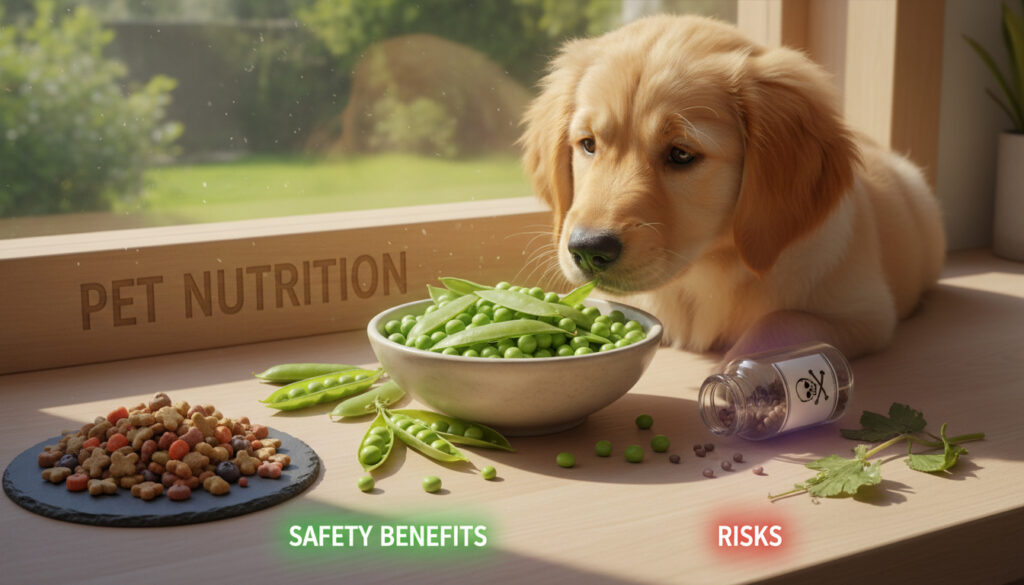
Can Dogs Eat Peas – Safety, Benefits and Risks Guide
Dogs can safely consume peas as an occasional treat or meal topper when prepared properly. Green peas, snow peas, and snap peas all offer nutritional benefits including vitamins A, C, and K, along with fiber and protein that support immune function, digestion, and overall health.
However, preparation methods and portion control determine whether this vegetable supports or harms your pet. Understanding the distinction between safe varieties and potentially dangerous forms ensures owners can offer this low-calorie snack without risking digestive upset or toxicity.
Veterinary guidance emphasizes moderation, particularly regarding commercial dog foods containing peas and the ongoing research into heart health connections.
Can Dogs Eat Peas Raw or Cooked?
Safe? Yes, plain peas are non-toxic to dogs.
Best Prep: Cooked improves digestibility; raw requires shelling.
Benefits: Vitamins A, B, C, K; fiber; protein; antioxidants.
Risks: Choking from pods, excess gas, high sodium in canned.
Key Insights:
- Fresh and frozen green peas offer concentrated nutrition without harmful additives.
- Raw peas require shelling to prevent choking hazards and reduce digestive difficulty.
- Cooked peas provide better nutrient absorption for most dogs than raw.
- Canned varieties contain dangerous sodium levels that risk dehydration and toxicity.
- Sweet pea plants (the garden flower) are toxic to dogs, unlike edible garden peas.
- Mashing is recommended for toy breeds to prevent airway obstruction.
- Peas should never exceed ten percent of daily caloric intake.
| Aspect | Details |
|---|---|
| Toxicity | Non-toxic to dogs (excluding ornamental sweet pea plants) |
| Safe Varieties | Garden peas, snow peas, snap peas, chickpeas, black-eyed peas |
| Preparation | Raw (shelled) or cooked (plain, no salt/butter) |
| Serving Size | Small amounts as occasional treats, not meal replacements |
| Nutritional Value | Vitamins A, B, C, K; iron; manganese; phosphorus; fiber; lutein |
| Must Avoid | Canned, seasoned, buttered, creamed, or pod-containing servings |
| Choking Risk | Present in whole pods or frozen peas for small breeds |
| Caloric Impact | Low-calorie when plain and unprocessed |
| Digestibility | Higher when cooked; raw may reduce nutrient absorption |
| Safety Note | Thaw frozen “ready-to-eat” varieties fully; cook “ready-to-cook” varieties |
Veterinary sources confirm that most varieties of green peas are fine for dogs when served plain. Purina nutritional guidelines indicate that both raw and cooked forms provide essential nutrients, though cooking generally improves digestibility.
Can Dogs Eat Peas Everyday?
Daily consumption requires strict portion control. While peas offer health benefits, they function best as supplementary treats rather than dietary staples.
Daily Guidelines and Calorie Limits
Veterinary nutritionists recommend limiting peas to no more than ten percent of your dog’s daily caloric intake. For a twenty-pound dog, this typically means no more than one to two tablespoons of cooked, shelled peas per day. Smaller breeds require proportionally less.
Veterinary nutritionists recommend limiting peas to no more than ten percent of your dog’s daily caloric intake. For a medium-sized dog, this translates to roughly one to two tablespoons of cooked, shelled peas per day.
Peas appear frequently in Best Dog Food UK formulations as carbohydrate sources. However, whole food additions to commercial diets still count toward daily caloric totals.
Monitoring Digestive Tolerance
Introduce peas gradually to assess individual tolerance. High fiber content benefits digestion in moderate amounts but causes gas, bloating, or diarrhea when overfed. PetMD veterinary sources note that excessive consumption commonly leads to gastrointestinal upset.
What Problems Are There with Peas in Dog Food?
While individual peas pose minimal risk, their inclusion in commercial diets has attracted regulatory scrutiny regarding cardiac health.
The DCM Investigation
The FDA continues investigating links between grain-free diets containing peas, lentils, and potatoes and dilated cardiomyopathy (DCM) in dogs. Tufts University research examining nine DCM-associated diets identified peas as a “leading possible ingredient,” though no direct causation has been established.
The FDA continues investigating links between grain-free diets containing peas, lentils, and potatoes and dilated cardiomyopathy in dogs. While peas appear frequently in affected diets, researchers have not established direct causation, and the investigation encompasses multiple dietary factors beyond single ingredients.
The investigation remains complex, complicated by factors such as taurine levels, processing methods, and overall diet formulation. American Kennel Club experts advise monitoring dogs on grain-free foods for DCM symptoms including lethargy, weakness, or coughing.
Kidney and Purine Concerns
Peas contain high levels of purines, which metabolize into uric acid. Dogs with existing kidney stones or renal issues should avoid peas entirely, as the increased uric acid can exacerbate these conditions.
Physical Hazards
Unshelled pods present choking risks, particularly for small breeds. Frozen peas can obstruct airways if swallowed whole. Always remove pods and consider mashing for toy breeds.
Can Dogs Eat Green Beans Instead?
Green beans offer a comparable low-calorie vegetable alternative with fewer associated risks. Like peas, they provide vitamins A, C, and K, along with fiber that supports digestive health.
Green beans provide similar fiber and vitamin content without the purine-related kidney concerns or DCM associations linked to peas. They digest easily whether served raw or cooked, making them ideal for dogs with sensitive stomachs.
Unlike Honey Roasted Carrots and Parsnips, which contain added sugars unsuitable for canines, plain green beans or peas should never include seasonings, butter, or oil. Chewy veterinary educators emphasize that green beans serve as safer training treats for dogs requiring strict calorie control.
Green beans carry minimal choking risk when chopped appropriately and lack the high purine content that concerns veterinarians regarding pea consumption for dogs with renal sensitivities.
How Has Research on Peas in Dog Food Evolved?
- : Peas become common carbohydrate and protein sources in grain-free dog foods, replacing traditional grains.
- : FDA announces investigation into reports of canine dilated cardiomyopathy (DCM) in breeds not typically predisposed to the condition.
- : Early FDA reports indicate that peas, lentils, and potatoes appear frequently in diets of affected dogs, though causation remains unproven.
- : Tufts University research identifies peas as a “leading possible ingredient” in DCM-associated diets while noting complex interactions with other dietary factors.
- : Investigation continues without conclusive evidence linking peas directly to DCM; veterinarians recommend caution for at-risk breeds.
Current research suggests that diet-related DCM involves multiple factors including processing methods, taurine levels, and overall nutritional balance rather than single ingredients. Taste of the Wild nutritional research supports monitoring dogs on legume-heavy diets for early signs of cardiac issues.
What Is Definitively Known About Peas and Canine Health?
| Established Information | Information That Remains Unclear |
|---|---|
| Peas are non-toxic to dogs in plain, unseasoned forms | Exact quantity thresholds that might trigger DCM symptoms |
| Raw and cooked forms are digestible when shelled | Long-term effects of daily pea consumption over years |
| High fiber supports digestive health in moderation | Specific breed susceptibility to pea-related cardiac issues |
| Canned peas cause sodium toxicity and dehydration | Whether specific processing methods increase DCM risk |
| Peas contain high purines affecting kidney function | Interaction mechanisms between peas and taurine absorption |
| Sweet pea plants (Lathyrus) are toxic, unlike edible varieties | Safe minimum inclusion rates in commercial dog foods |
MetLife Pet Insurance veterinary sources confirm that while basic safety and nutritional profiles are well-documented, the relationship between peas and dilated cardiomyopathy requires further longitudinal study.
Why Do Commercial Dog Foods Include Peas?
Pet food manufacturers incorporate peas primarily as carbohydrate sources that provide structure to kibble while offering lower glycemic impact than traditional grains. The vegetable contributes plant-based protein, binding properties, and essential nutrients including iron and manganese.
In grain-free formulations, peas replace wheat or corn as primary starch sources. This shift emerged in response to consumer demand for alternative carbohydrate sources, though subsequent research into DCM has complicated the nutritional landscape. Manufacturers continue using peas within established safety guidelines while monitoring ongoing FDA investigations.
What Do Expert Sources Recommend?
Peas are not toxic to dogs and offer nutritional benefits, but ongoing research into their role in certain heart conditions requires careful monitoring of grain-free diets.
American Kennel Club
Most varieties of green peas are fine for dogs, providing essential vitamins and fiber when served plain without additives.
Purina Nutritional Experts
Green peas remain a nutrient-balanced treat option when owners follow moderation guidelines and avoid seasoned preparations.
Dr. Apted, via Chewy
Veterinary consensus emphasizes consulting professionals before introducing regular pea consumption, particularly for dogs with renal histories or those consuming grain-free commercial foods. Veterinary guidance from DogIDs recommends gradual introduction to assess individual tolerance.
Summary
Plain peas—whether raw and shelled or cooked without additives—provide safe, nutritious treats for most dogs when limited to ten percent of daily calories. Avoid canned peas entirely due to sodium content, and never feed sweet pea plants. Dogs with kidney issues should skip peas altogether because of high purine content, while those on grain-free diets require monitoring for DCM symptoms. Green beans offer a simpler alternative for sensitive systems. Consult veterinary professionals before making peas a dietary staple.
FAQ
Can dogs eat peas with the skin or pod?
No. Remove pods before feeding, as they present choking hazards and are harder to digest. Shell all peas, especially for small breeds.
Can dogs eat frozen peas?
Yes, if thawed and served plain. “Ready-to-eat” frozen peas thawed fully are safe, while “ready-to-cook” varieties require cooking to eliminate bacteria.
Are canned peas safe for dogs?
No. Canned peas contain high sodium levels that risk dehydration, vomiting, diarrhea, or serious health complications. Stick to fresh or frozen.
Can dogs eat sweet peas from the garden?
No. Sweet pea plants (Lathyrus odoratus) are toxic to dogs and can cause weakness, seizures, or death. Only feed edible Pisum sativum varieties.
Why do some dogs experience gas from peas?
High fiber content causes gas in sensitive dogs. Gradual introduction and portion control reduce digestive upset.
Are there UK-specific regulations for peas in dog food?
No unique UK restrictions exist. Peas comply with general EU/UK pet food guidelines (FEDIAF) as ordinary ingredients, matching international safety standards.
Can dogs eat peas every day?
Small amounts daily are acceptable if kept under ten percent of total caloric intake, but veterinary guidance recommends varying treats to ensure nutritional balance.
Should I worry about DCM if my dog eats peas occasionally?
Occasional whole-food peas present minimal DCM risk compared to grain-free commercial diets where peas serve as primary ingredients. Consult your vet if your dog shows lethargy or weakness.
More related posts
 Strictly Come Dancing Vote: How to Vote Online (2025)
 Man City vs Real Madrid Stats – Head-to-Head Record and Recent Results
 F1 (Film): Brad Pitt’s Driving, Real Story & Netflix
 Return to Silent Hill: 2026 Release, Trailer & Reviews
 iPhone 11 Phone Case Guide: Best Picks & Compatibility
 Most Liked Instagram Post – Messi’s World Cup Record Tops All
 Three SIM Only Deals: Unlimited Data & Prepay in Ireland
 Morgan Kohan: Age, Height, Relationship, and Why She Wears a Wig
