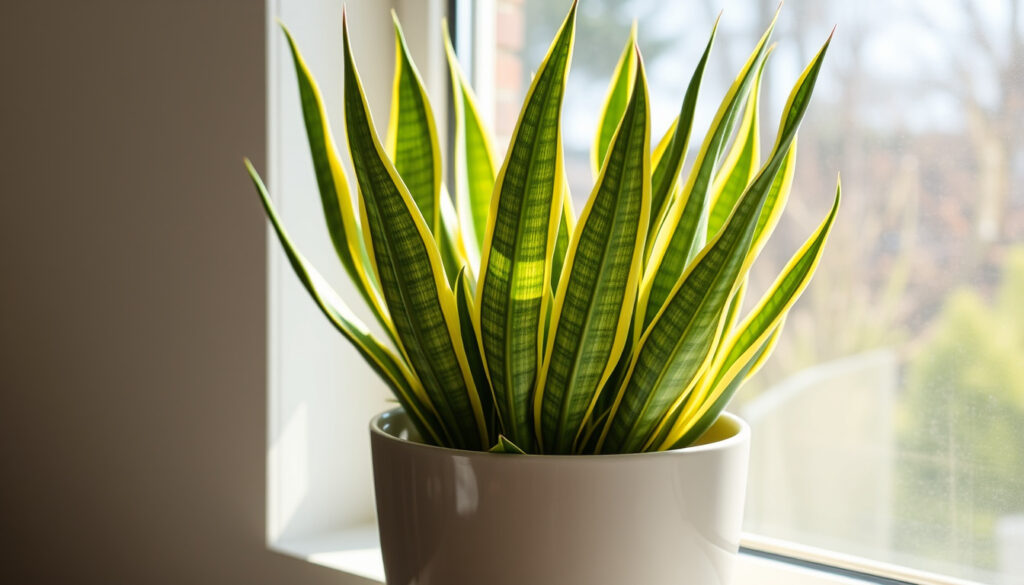
Mother-in-Law’s Tongue Plant: Care, Placement & Lifespan Guide
If you’ve ever killed a houseplant by forgetting to water it for weeks, the mother-in-law’s tongue might be the answer you’ve been searching for. This striking plant with sword-shaped, variegated leaves has earned a reputation as one of the most forgiving greens you can grow indoors.
Common names: Snake plant, mother-in-law’s tongue, viper’s bowstring hemp · Lifespan: Generations, extremely long-lived · Maintenance level: Extremely low · Foliage type: Upright, sword-shaped, variegated deep green · Ideal for: Indoors, architectural foliage
Quick snapshot
- Native to Africa, Madagascar, and southern Asia (Plantify care guide)
- Water every 2–3 weeks in summer, once monthly in winter (HOLA lifestyle guide)
- Prefers temperatures between 15°C and 30°C (59°F–86°F) (HOLA lifestyle guide)
- Exact maximum lifespan figures
- How frequently mature plants flower
- Real-world air purification effectiveness
- Best placed in southeast corner (wealth area) or entryway (Homes and Gardens Feng Shui guide)
- Sharp leaves symbolize protection but may clash with bedroom energy (Homes and Gardens Feng Shui guide)
- Traditional practitioners advise against bedroom placement (Homes and Gardens Feng Shui guide)
- Repot every 2–3 years in spring or summer
- Propagate via leaf cuttings or division
- Watch for root rot if leaves yellow or soften
The table below summarizes the key botanical and care attributes used throughout this guide.
| Attribute | Detail |
|---|---|
| Scientific name | Dracaena trifasciata (formerly Sansevieria trifasciata) |
| Other names | Snake plant, mother-in-law’s tongue |
| Growth habit | Upright sword-shaped leaves |
| Maintenance | Extremely low |
| Longevity | Generations |
How to look after a mother-in-law’s tongue plant?
The mother-in-law’s tongue rewards neglect rather than constant attention. According to HOLA (lifestyle publication), watering every 2–3 weeks during summer and once a month in winter strikes the right balance for most indoor environments.
Watering tips
- Allow the top 2.5cm of soil to dry out between waterings during summer months
- In winter, water just enough to keep soil from drying out completely
- Water only the soil, never the leaves or center of the rosette — moisture here invites rot
- The only reliable way to kill a snake plant is through overwatering (YouTube care tutorial)
Soil and potting
- A well-draining mix designed for succulents or cacti works best (HOLA)
- Repot every 2–3 years, or when roots start crowding the pot
- Spring or summer is the ideal repotting window since the plant is in active growth mode
Overwatering is the main cause of death in snake plants and can lead to root rot within weeks if soil stays soggy.
Light requirements
- Thrives in bright, indirect light but adapts readily to low-light conditions (HOLA (lifestyle publication))
- Avoid moving plants abruptly from low light to bright sun — the sudden shift can bleach leaves
- Maintain temperatures between 15°C and 30°C (59°F–86°F) (HOLA (lifestyle publication))
- Keep plants above 10°C minimum — cold drafts in winter are a genuine threat (Patch Plants care guide)
Fertilizing
- Apply diluted liquid fertilizer every 4–6 weeks during the growing season (spring and summer) (HOLA (lifestyle publication))
- Skip feeding entirely during autumn and winter when growth slows
- Wipe leaves with a damp cloth periodically to keep them dust-free and glossy (Plantify care guide)
What this means: even if you travel frequently or tend to forget watering schedules, this plant tolerates benign neglect far better than most houseplants. For beginners, that forgiveness is the feature, not a coincidence.
Where to place a mother-in-law tongue plant?
Placement matters both for the plant’s health and for traditional energy considerations. Homes and Gardens (home design publication) notes that snake plants are often positioned in the southeast corner of homes — the Feng Shui wealth area — where their tall, sword-like leaves lend protective energy.
Best indoor spots
- Living rooms and entryways: the plant adds sleek architectural style while welcoming positive qi at the portal where energy enters the home
- Home offices: placement can shield from challenging energy when dealing with difficult co-workers or clients (Homes and Gardens Feng Shui guide)
- Near windows with indirect light: even a north-facing window typically suffices
- The east corner of a home corresponds to family, health, and vitality — another traditional placement zone (Homes and Gardens Feng Shui guide)
Light and temperature
- Bright indirect light is ideal; the plant tolerates low light but grows more slowly
- Avoid direct afternoon sun — intense rays scorch the leaf tips
- Maintain stable room temperatures; avoid positioning near radiators, air conditioning units, or drafty windows
Avoid direct sun
- Prolonged direct sun leads to pale, bleached leaves and tip burn
- If moving from a dim corner to brighter light, transition gradually over 2–3 weeks
- North-facing windows are perfectly adequate for survival and slow, steady growth
For plant health alone, any room with consistent room temperature and some ambient light will do. Add Feng Shui considerations, and the entryway or southeast living room corner becomes the preferred choice.
The pattern: where you place this plant affects both its vigor and the energy dynamics of the room. Rooms with stable temperatures and filtered light outperform drafty hallways every time.
Where should you not put a snake plant?
Certain locations undermine both the plant’s health and traditional placement principles. Patch Plants (UK houseplant retailer) notes that snake plants prefer dry conditions, making humid rooms a poor choice.
Bedroom taboos
- Feng Shui practitioners caution against bedroom placement because the sharp leaves symbolize cutting or harsh energy that may disturb rest (Homes and Gardens Feng Shui guide)
- If you do place one in a bedroom, position it in a corner far from the bed or on a low shelf near a window — never beside the pillow
- Traditional practitioners warn that spiky plants generally conflict with the gentle, nurturing energy recommended for sleep spaces
High humidity areas
- Bathrooms are unsuitable — the constant moisture and humidity encourage fungal problems and root rot (Patch Plants care guide)
- Kitchens with poor ventilation pose similar risks during cooking
- Cold conservatories or unheated porches in winter can drop below the 10°C minimum threshold
Monk-proven no-go zones
- Directly beside beds: traditional placement guides consistently advise against this position
- Near meditation cushions or prayer areas: the sharp upward leaves are thought to disrupt calm focus
- The center of a room with no other furniture: Feng Shui associates open space with scattered energy
- Overloading a home with too many plants can create challenges opposite to Feng Shui principles (Homes and Gardens Feng Shui guide)
Households with pets and young children should avoid placing snake plants on low shelves or floor-level positions. The plant is mildly toxic if ingested and can cause stomach upset in cats, dogs, or curious toddlers.
The implication: placement is not purely aesthetic — humidity levels, temperature stability, and traditional energy mapping all converge on specific zones to avoid. For most homes, the bathroom and bedside table are the two locations to rule out first.
Why is it called mother-in-law tongue?
The name reflects the plant’s distinctive leaf shape more than any horticultural lineage. Each stiff, upright blade resembles a tongue — sharp-tipped, rigid, and occasionally pointed in conversation — earning it the tongue descriptor across multiple cultures.
Name origins
- Mother-in-law’s tongue: the common English name references the long, pointed leaves that “speak” without saying anything pleasant
- Snake plant: the leaf pattern and upright posture suggest a coiled serpent rising from the soil
- Saint George’s sword: in Caribbean and Latin American traditions, the leaves represent the saint’s weapon against evil
- Viper’s bowstring hemp: the durable leaf fibers were historically used for bowstrings and cordage
Common aliases
- Snake plant (Sansevieria trifasciata) — the most widely used commercial name
- Dracaena trifasciata — the current botanical reclassification
- Good luck plant — a positive spin common in some Asian markets
What this means: the plant’s folk names all converge on the same physical characteristics — upright, pointed, sword-like leaves — rather than any single cultural tradition. Whether you call it mother-in-law’s tongue or snake plant, you’re referencing the same distinctive silhouette.
What is the lifespan of a snake plant?
Snake plants are built to outlast their owners. Plantify (South African plant retailer) describes them as almost impossible to kill and perfect for beginners, with some specimens reportedly living for several decades under minimal care.
Expected longevity
- Indoor specimens regularly survive 20–30 years with basic watering and occasional repotting
- Outdoor specimens in frost-free climates can live for generations — a single rhizome division may outlive multiple owners
- The key killers are overwatering and prolonged cold exposure, not age
Factors affecting life
- Pot-bound roots can slow growth but do not kill the plant
- Infrequent repotting actually benefits longevity — dividing the rhizomes creates new plants and extends the lineage
- Snake plants seem immune to most common houseplant pests and diseases (Plantify care guide)
- Mature plants may produce small white flowers at the base after several years — a rare but encouraging sign of health
Snake plants grow slowly, which frustrates owners who want immediate results. The flip side is equally true: they age slowly too, meaning a well-placed specimen becomes a long-term fixture rather than a seasonal decoration.
Upsides
- Near-zero maintenance requirements — thrives on neglect
- Tolerates low light and irregular watering
- Air-purifying reputation: reportedly releases oxygen at night
- Pest and disease resistant in indoor conditions
- Architectural foliage adds visual structure to any room
- Feng Shui protection symbolism for entryways
- Propagates easily from leaf cuttings or root division
Downsides
- Mildly toxic to cats, dogs, and humans if ingested
- Slow growth means limited visual impact in first years
- Sharp leaf tips can pose injury risk near children
- Traditional Feng Shui discourages bedroom placement
- Bathrooms and high-humidity rooms cause decline
- Cold temperatures below 10°C cause lasting damage
- Can become leggy in very low light conditions
Step-by-step growing guide
- Step 1: Choose your pot and soil — Select a pot with drainage holes and fill with a cactus or succulent potting mix. A terra cotta pot is preferable since it allows soil to dry out faster than plastic containers.
- Step 2: Position the plant — Place in bright indirect light, ideally 1–2 metres from a window. Avoid direct sun, cold drafts, and rooms with fluctuating temperatures. The entryway, living room, or home office are all strong choices.
- Step 3: Water sparingly — Water every 2–3 weeks in summer, once a month in winter. Always check that the top 2.5cm of soil is dry before watering. Apply water directly to the soil — never on the leaves or leaf centre.
- Step 4: Feed during growing season — Apply diluted liquid fertilizer every 4–6 weeks from mid-spring through summer. Suspend feeding entirely from autumn onwards.
- Step 5: Repot every 2–3 years — Repot in spring or summer when roots emerge from drainage holes or circle the pot interior. Refresh the soil mix, divide the rhizomes if desired, and return to the same light position.
- Step 6: Propagate as needed — Cut a healthy leaf into 8cm sections and insert the base into fresh succulent soil. Keep barely moist in indirect light. Alternatively, separate rhizome divisions during repotting for faster-rooted offspring.
Related reading: pets and children · garden centres
Much like the resilient cast iron plant guide, Mother-in-Law’s Tongue excels in low-light spots with minimal fuss for long-term indoor success.
Frequently asked questions
What makes a snake plant happy?
Bright indirect light, well-draining soil, and a watering schedule that lets the top few centimetres of soil dry between waterings. Stable room temperatures between 15°C and 30°C suit it best. The plant tolerates low light and irregular watering, but consistently wet soil is its one true enemy.
How to grow sansevierias?
The same principles apply to all Sansevieria varieties (now classified as Dracaena). Provide well-draining succulent mix, position away from direct sun, water sparingly every 2–3 weeks in summer, and repot every few years in spring. Leaf propagation works for all common varieties, though variegated cultivars may lose their pattern when propagated from single-leaf cuttings.
What are snake plant benefits?
Snake plants are credited with improving indoor air quality by filtering toxins like formaldehyde and benzene. Some sources report they release oxygen at night, potentially benefiting bedroom air. Beyond air quality, their sculptural form adds architectural interest to interiors with minimal upkeep — a combination few houseplants match.
Does mother-in-law’s tongue flower?
Mature plants occasionally produce small white flowers at the base after several years of growth. Flowering is uncommon indoors and signals the plant is thriving under adequate light. The blooms are modest but fragrant, appearing on a tall stalk emerging from the soil centre.
Is mother-in-law’s tongue toxic?
Yes — the plant is mildly toxic if ingested by humans, cats, or dogs. The ASPCA flags it as toxic to pets, with symptoms including nausea, vomiting, and diarrhoea. Keep specimens out of reach of children and pets, or choose a different plant if household members are prone to chewing on houseplants.
Can mother-in-law’s tongue grow outdoors?
In frost-free climates (USDA zones 9–11), snake plants grow outdoors year-round as ground cover or border specimens. In cooler climates, move pots outside during summer but bring them indoors before autumn temperatures drop below 10°C. Direct sun is tolerated in morning hours, but afternoon shade prevents leaf scorch.
How to propagate snake plant?
The two reliable methods are leaf cuttings and rhizome division. For leaf cuttings, cut a healthy leaf into sections, let the cut ends dry for 24 hours, then insert the base into cactus mix. Keep barely moist in indirect light. For division, unpot the mother plant, separate rooted rhizome sections with clean tools, and repot each division independently. Division is faster and produces mature-looking plants sooner.
The bottom line is straightforward: the mother-in-law’s tongue earns its reputation as the most forgiving houseplant available. Forget to water it for weeks — it survives. Keep it in a dim corner — it persists. The trade-off is slow growth and traditional placement restrictions that sideline it from bedrooms and bathrooms. For anyone building a collection of low-maintenance indoor plants or seeking a Feng Shui protective specimen for an entryway, the snake plant delivers decades of architectural foliage with almost no intervention required.
More related posts
 Why Rise of the Guardians Flopped & Nearly Ruined DreamWorks
 Most Liked Instagram Post – Messi’s World Cup Record Tops All
 CW Sellors Administration Collapse – Timeline, Jobs and Customer Advice
 Molton Brown Shower Gel – Black Pepper Sizes and UK Guide
 Who Is the Most Powerful Doctor in the World – Tedros’ Global Authority
 Tube Strike London 2025 – Dates Lines Affected Travel Tips
 Non Stop Black Sunbed Cream Review: Does It Really Work?
 When is Grand National 2025? Date, Time, Results, Runners
