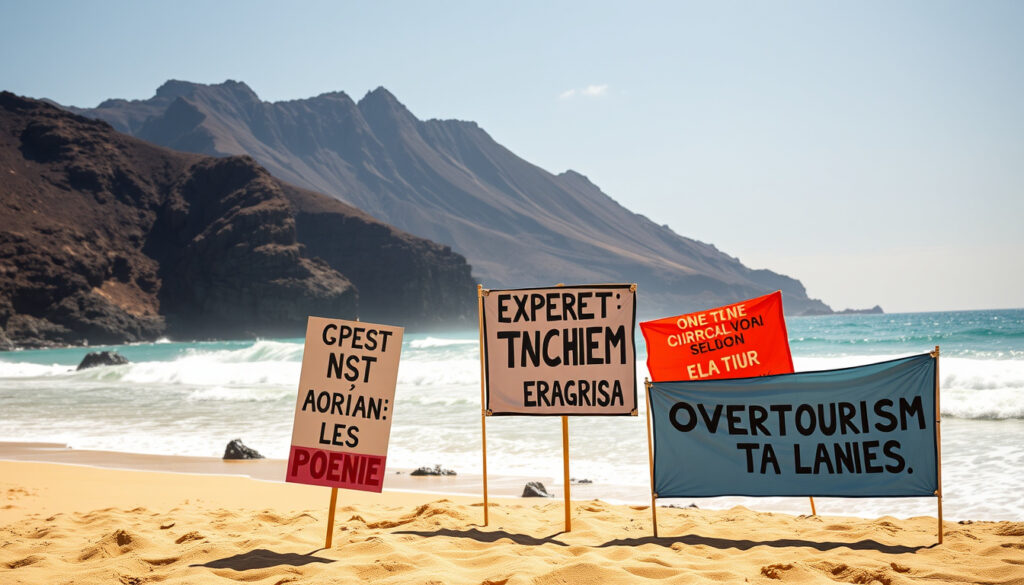
Canary Islands Tourism Protests – Latest News and Impacts
Thousands of Canary Islands residents took to the streets in May 2025 to protest against overtourism, raising concerns about soaring housing costs, environmental degradation, and overburdened public services. Demonstrations spread across Tenerife, Gran Canaria, and other islands under the banner “Canaries Have a Limit,” marking one of the largest grassroots movements against mass tourism in recent European history.
The protests drew attention to a contradiction that has intensified over recent years: tourism accounts for roughly one-third of the regional GDP, yet many locals argue the industry has pushed housing prices beyond reach and damaged natural spaces. Organizers stressed that their message targets unsustainable growth patterns rather than tourists themselves, calling instead for regulatory changes to protect residents and the environment.
Authorities have begun responding to mounting pressure, with Spanish officials ordering platforms to remove tens of thousands of illegal listings. However, advocates say far more comprehensive measures are needed as projections indicate 2025 could surpass previous visitor records. Comprehensive coverage from major news outlets has documented the scale of public frustration across the archipelago.
Canary Islands Tourism Protests Today
The most recent mass demonstrations unfolded on May 18, 2025, with thousands participating across all major islands and even in mainland Spain cities. This followed a significant April 2025 protest in Tenerife that attracted tens of thousands, setting the stage for intensified springtime action.
The demonstrations represented one of the largest coordinated anti-overtourism movements in Europe, with participation spanning multiple islands and cities in a single day.
Tens of thousands protesting across multiple locations
Overtourism straining housing availability and environment
Gran Canaria, Tenerife, and other archipelago islands
Peaks in April–May, with ongoing local actions throughout 2025
Key insights from the protests:
- Protesters demanded an eco-tax on visitors to fund environmental restoration and affordable housing initiatives
- Calls emerged to suspend new hotel and vacation home permits indefinitely
- Residents pushed for mandatory limits on annual tourist numbers
- The slogan “The beach is ours” became a rallying cry across demonstrations
- Advocates called for stricter regulation of non-resident property purchases
- Participants urged protection of exclusive local areas where tourist access would be restricted
- Opposition centered on what organizers described as a “predatory” business model rather than tourism itself
| Fact | Detail |
|---|---|
| Protesters | Tens of thousands across all major islands |
| Main Grievances | Housing prices, environmental damage, overloaded services |
| Key Demonstration | May 18, 2025 coordinated island action |
| Preceding Event | April 2025 Tenerife rally drawing tens of thousands |
| Visitor Record | Nearly 18 million tourists in 2024 |
| Monthly Visitors | Over 1 million, exceeding half the resident population |
Gran Canaria Canary Islands Tourism Protests
Gran Canaria joined Tenerife and other islands in the May 2025 demonstrations, highlighting how anti-overtourism sentiment has spread throughout the archipelago. Local organizers worked alongside groups on sister islands to coordinate simultaneous actions, creating a rare display of unified resistance.
Footage from the Gran Canaria protests showed locals participating alongside community groups, with chants echoing those heard in Tenerife. The island has experienced significant visitor growth in recent years, with natural attractions and coastal areas bearing the brunt of increased foot traffic.
Residents reported that overcrowded beaches and congested streets have become routine during peak seasons, prompting many to question whether infrastructure can sustain continued growth. The frustration extends beyond tourism’s direct impacts to encompass broader concerns about property speculation and the transformation of residential neighborhoods into short-term rental zones.
The protests in Gran Canaria also drew connections to similar movements in Barcelona, Mallorca, Madrid, and Malaga, where water-gun incidents against diners made headlines earlier in the year. This geographical spread suggests overtourism concerns have become a nationwide conversation in Spain rather than an island-specific issue.
The May 2025 protests marked the first time residents across multiple Canary Islands staged synchronized demonstrations, reflecting growing frustration that transcends individual island concerns.
Demands Specific to the Islands
Demonstrators presented a range of policy requests tailored to the Canary Islands’ unique situation. Beyond general limits on visitor numbers, organizers called for measures addressing the region’s specific vulnerabilities as a small island chain with limited land area and fragile ecosystems. International research on sustainable tourism development provides context for these concerns.
Local Sentiment and Resident Perspectives
Many Gran Canaria residents emphasized they do not oppose tourism as an industry but reject how current models distribute wealth and opportunities. Long-term residents increasingly find themselves priced out of central neighborhoods as property investors convert units into vacation rentals catering to short-term visitors.
Canary Islands Tourism Problems
The protests brought renewed attention to structural problems that have accumulated over years of record-breaking visitor numbers. Housing costs emerged as perhaps the most pressing concern, with record tourism driving speculation that makes homes increasingly unaffordable for local residents.
Property investors have responded to tourist demand by converting residential units into short-term rentals, removing available housing stock from the market. This trend has been particularly acute in coastal areas and popular tourist zones, where landlords can earn far more from nightly rentals than from long-term leases to local families.
Environmental degradation has compounded these housing concerns. Natural areas face pressure from increased foot traffic, while congested streets and overburdened public services strain community resources. Protest organizers cited “infinite growth” as an unsustainable model for islands with finite capacity.
With over one million visitors arriving monthly—exceeding half the resident population, the Canary Islands face infrastructure and environmental challenges that many believe cannot be addressed through current growth models alone.
Housing Affordability Crisis
The housing situation has reached a critical juncture. Families who have lived in the islands for generations increasingly find themselves unable to afford rising rents or property prices, while foreign investors and vacation rental platforms dominate the market. The phrase “my misery, your paradise” captured resident sentiments as documented by news outlets covering the demonstrations.
Infrastructure Strain
Public services designed for resident populations struggle to accommodate seasonal surges. Roads become congested, beaches become overcrowded, and municipal services face demands that exceed original planning assumptions. This infrastructure strain creates daily frustrations for residents navigating their own communities during peak periods.
Canary Islands Tourism Protests Reddit Discussions
Beyond mainstream news coverage, online forums have served as spaces for residents and observers to discuss overtourism impacts. Reddit discussions have featured firsthand accounts from locals describing how tourism pressures affect daily life, from housing searches to neighborhood changes.
These community discussions often highlight the tension between tourism’s economic benefits and its social costs. Participants share concerns about rising property values, changes to neighborhood character, and the feasibility of long-term residency for working families.
Media organizations have noted these online conversations as indicators of growing public awareness about tourism’s effects. While forum discussions lack the formal structure of news articles, they provide valuable perspectives on how residents experience and interpret the changes unfolding around them.
Voices from Affected Communities
Forum contributors have shared specific examples of housing difficulties, including properties being converted to vacation rentals and long-term rental listings disappearing from local platforms. These personal accounts complement broader statistical data about housing affordability trends.
Timeline of Major Demonstrations
The anti-overtourism movement in the Canary Islands has intensified significantly over recent months. A chronological view of key events reveals escalating participation and coordination among protesters.
- : A major rally in Tenerife drew tens of thousands, marking one of the first large-scale expressions of anti-overtourism sentiment
- : Another significant demonstration in Tenerife attracted tens of thousands, building momentum for spring protests
- : Coordinated demonstrations across all major islands and mainland Spain cities, with thousands participating
- : Ongoing local actions and community organizing continue as residents await policy responses
What We Know and What Remains Unclear
Coverage of the protests has established certain facts while leaving other questions unanswered. Understanding both what is confirmed and what requires further investigation helps contextualize the situation.
Established information:
- Major protests occurred on May 18, 2025, with thousands participating across the archipelago
- The demonstrations followed months of organizing under the “Canaries Have a Limit” banner
- Tourists numbered nearly 18 million in 2024, setting records at that time
- Spanish authorities ordered the removal of tens of thousands of illegal listings from rental platforms
- Residents cite housing costs, environmental concerns, and service overload as primary grievances
- The protests echo similar movements in Barcelona, Mallorca, Madrid, and Malaga
Information that remains unclear:
- The specific timeline for any new tourism regulations proposed by regional authorities
- Whether the eco-tax proposed by protesters will be implemented and at what rate
- The extent to which the Canary Islands government will restrict new hotel construction
- Whether monthly visitor limits, if adopted, would be legally enforceable
- The precise impact of government actions on existing short-term rental listings
- Future protest scheduling remains uncertain as organizers assess responses to current actions
Government Response and Policy Actions
Spanish authorities have begun implementing measures in response to mounting pressure. Most notably, officials ordered platforms to remove between 60,000 and 65,000 illegal listings nationwide, signaling willingness to address unauthorized vacation rentals.
Regional officials in the Canary Islands sought European Union funding to support affordable housing initiatives, recognizing that addressing the housing crisis requires resources beyond what local governments can provide. The islands have also tightened regulations on short-term rentals, though enforcement remains an ongoing challenge.
Despite these steps, 2025 is projected to be the busiest tourism year yet for the archipelago, surpassing even 2024’s record visitor numbers. This paradox—amid ongoing protests, the industry continues expanding—underscores the difficulty of balancing economic interests with resident welfare. Data from tourism industry analysts provides insight into these visitor projections.
While authorities have taken steps against illegal listings, enforcement remains complex given the volume of rental platforms and the sophistication of operators seeking to circumvent regulations.
Broader Context: Overtourism Across Spain
The Canary Islands protests did not occur in isolation. Similar movements have emerged across Spain, with Barcelona, Mallorca, Madrid, and Malaga experiencing their own anti-overtourism demonstrations. The geographic spread of these protests suggests structural tensions between tourism growth and residential quality of life have become national concerns.
In some locations, frustrations have manifested in more confrontational ways. Water-gun incidents targeting diners made headlines as some residents escalated tactics beyond organized demonstrations. These incidents highlight the depth of feeling in affected communities, even as protest organizers maintained their focus on policy change rather than direct confrontation with visitors.
The Spanish experience reflects broader European conversations about tourism sustainability. Cities from Venice to Amsterdam have grappled with similar tensions, and the Canary Islands have become a focal point for debates about whether small island destinations can accommodate unlimited visitor growth. Environmental organizations have published extensive research on carrying capacity for tourist destinations.
Sources and Key Perspectives
Residents emphasized they support tourism as a significant economic contributor but oppose what they describe as a predatory model where foreign investors purchase properties and rent them at prices that overwhelm local communities.
— Coverage from multiple news outlets documenting the protests
The beach is ours — the chant echoed across demonstration sites as protesters called for recognition of resident rights alongside tourist access.
— Witness accounts from Tenerife and Gran Canaria demonstrations
News organizations including Euronews, NBC News, Sky News, Firstpost, and BBC have documented various aspects of the protests, providing video footage, resident interviews, and analytical context. These sources offer overlapping but distinct perspectives on the movement’s origins, demands, and potential trajectories.
Looking Ahead
The Canary Islands tourism protests represent a significant moment in the ongoing debate about sustainable tourism in Europe. With the archipelago hosting record visitor numbers while locals face housing difficulties and environmental concerns, pressure for policy changes continues to build.
Authorities face the challenging task of balancing tourism’s economic importance—contributing roughly one-third of regional GDP—against residents’ quality of life concerns. Whether proposed measures including eco-taxes, visitor limits, and rental restrictions will satisfy demonstrators remains to be seen.
Those interested in understanding accommodation options during this period of heightened debate may find it useful to review detailed information about specific properties, such as Sentido Aequora Lanzarote Suites, to better understand the range of visitor accommodations available throughout the islands. Additional local accommodation options can be explored through the property listing directory.
What caused the Canary Islands tourism protests?
The protests stemmed from concerns about overtourism, including soaring housing costs driven by short-term rental speculation, environmental degradation of natural areas, and overburdened public services. Nearly 18 million tourists visited in 2024, with over one million arriving monthly—more than half the resident population.
When did the major Canary Islands protests occur in 2025?
A significant demonstration took place on May 18, 2025, with thousands participating across all major islands and mainland Spain cities. This followed an April 2025 protest in Tenerife that drew tens of thousands of participants.
What are protesters demanding?
Demonstrators called for an eco-tax on tourists, suspension of new hotel and vacation home permits, limits on tourist numbers, reduced construction, regulation of non-resident property purchases, and exclusive local areas for residents.
What is the “Canaries Have a Limit” movement?
“Canaries Have a Limit” serves as the organizing banner for anti-overtourism demonstrations across the archipelago. The movement brings together residents from multiple islands to advocate for sustainable tourism policies and protection of housing and environmental resources.
How has the government responded to the protests?
Spanish authorities ordered the removal of 60,000 to 65,000 illegal listings from rental platforms. Canary Islands officials sought EU funding for affordable housing and tightened short-term rental regulations, though 2025 is projected to exceed previous visitor records.
Are the Canary Islands protests connected to other Spanish anti-overtourism movements?
Yes. The demonstrations echo similar protests in Barcelona, Mallorca, Madrid, and Malaga, where residents have also expressed concerns about tourism’s impact on housing, environment, and quality of life.
What impact has overtourism had on housing in the Canary Islands?
Record tourism has driven property speculation, with investors converting residential units into short-term rentals. This has made homes increasingly unaffordable for local residents and reduced available long-term housing stock in popular areas.
More related posts
 Isle of Skye Weather: Best Month, Rainfall, Midges & Storm Amy Guide
 Things to Do in Porto – Top Attractions and Itineraries
 Kendrick Lamar: Family, Feuds, and Friend or Foe to LGBTQ
 Rhi and Jeff MAFS Australia: Still Together in 2026
 Lil Kim: Biography, Conviction, Baby Daddy, Plastic Surgery
 iPhone 11 Phone Case Guide: Best Picks & Compatibility
 Bob Geldof: Net Worth, Live Aid, Family, and Life Now
