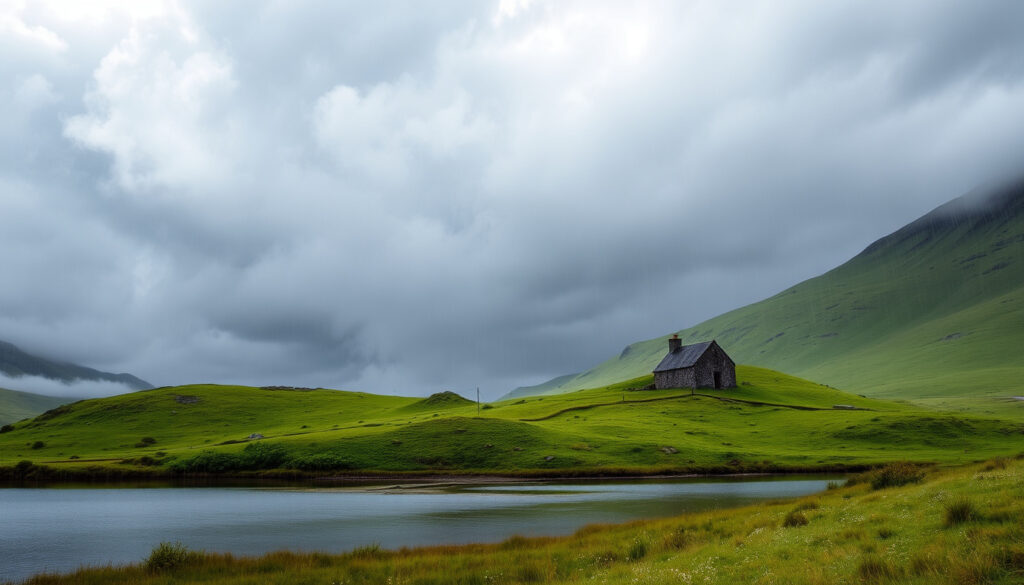
Isle of Skye Weather: Best Month, Rainfall, Midges & Storm Amy Guide
You’ve probably heard that it rains a lot on the Isle of Skye — and that’s not wrong. But knowing exactly how much, when it’s worst, and what that means for your visit makes all the difference between a trip that’s soggy and one that’s unforgettable.
Average annual rainfall on Skye: Over 2,000 mm (80 in) ·
Wettest month typically: January ·
Driest month typically: April or May ·
Average summer temperature: 12–15°C (54–59°F) ·
Midge season peak: May to September
Quick snapshot
- May/June – mild and driest (Isleofskye.com — Island weather guide)
- Average temp 12–15°C (Isleofskye.com — Weather & Seasons)
- Fewer tourists than summer (Annees de pelerinage — Skye travel blog)
- Over 2,000 mm/year (Isleofskye.com — Weather & Seasons)
- January wettest month (Annees de pelerinage — Skye travel blog)
- April driest month (Annees de pelerinage — Skye travel blog)
- Peak June/July (VisitScotland — Official travel guide)
- Avoid by visiting April/May or September (Isleofskye.com — Weather & Seasons)
- Use repellent (Isleofskye.com — Weather & Seasons)
- Check Met Office warnings (Met Office — UK weather warnings)
- Storm Amy amber warning (BBC Weather — Latest forecasts)
- Avoid open areas during storms (Met Office — Travel safety advice)
Here is a quick reference of essential climate numbers for the island.
| Metric | Value |
|---|---|
| Annual rainfall | >2,000 mm |
| Driest month | April (avg 80 mm) |
| Wettest month | January (avg 200 mm) |
| Summer high temp | 15°C (59°F) |
| Winter low temp | 3°C (37°F) |
| Midge season | May–September |
What is the best month to visit the Isle of Skye?
Monthly weather breakdown
- May and June offer the best balance of mild weather and fewer tourists (Isleofskye.com — Local island guide).
- April and May are statistically the driest months (Annees de pelerinage — Skye travel guide).
- Winter months (November–February) are wettest and darkest.
The pattern is clear: early summer gives you the best odds of decent weather without the midge swarm that hits in July. For hikers and photographers, this is the sweet spot.
Best months for hiking and photography
- Summer temperatures on Skye rarely rise above 17°C and may fall to about 7°C in the evenings (Isleofskye.com — Weather & Seasons).
- May and June see the most sunshine statistically (Annees de pelerinage — Skye travel guide).
- July and August are generally the warmest months but also the busiest and midge-ridden.
The trade-off: warmest months bring the most midges. If you want light for those iconic shots and can handle a light jacket, May and June give you the most photographic daylight and the fewest biting insects.
Avoiding peak tourist season
- July and August see the highest visitor numbers on Skye.
- Visiting in May, June, or September means fewer crowds and lower accommodation prices.
- Winter brings solitude but very short daylight hours (Isleofskye.com — Island weather guide).
For visitors who prefer quiet trails over packed car parks, the shoulder months deliver the best of both worlds.
Does it rain a lot in Skye?
Average rainfall figures
- Skye receives over 2,000 mm of rain annually (Isleofskye.com — Weather data).
- January is typically the wettest month (Annees de pelerinage — Skye travel blog).
- Even in summer, light rain is common — Portree averages 9 rainy days in July (Annees de pelerinage — Skye travel blog).
Visitors from drier climates will find Skye wet even in summer. The island averages more than double the annual rainfall of London. Pack a waterproof you actually trust.
How rainy days affect travel plans
- Heavy rain can make hiking trails slippery and reduce visibility on mountain paths.
- Road conditions on single-track roads become more hazardous in sustained rain.
- Indoor attractions like the Talisker distillery and Dunvegan Castle become popular fallbacks on wet days.
What this means: a flexible itinerary — with indoor options ready — turns a rainy Skye day from a disappointment into an experience.
Rain gear and packing tips
- A waterproof jacket and trousers are essential year-round.
- Waterproof hiking boots with good grip are non-negotiable for any serious walking.
- Pack layers: temperatures swing between 7°C and 17°C even in summer (Isleofskye.com — Seasonal advice).
For the traveller, the lesson is simple: don’t hope for dry weather, be ready for it. Proper gear makes Skye enjoyable in any conditions.
What time of year are midges worst in Scotland?
Midge season on Skye
- Midges are most active from May to September (VisitScotland — Official midge advice).
- Peak midge months are June and July (VisitScotland — Midge season guide).
- Windy and cooler days reduce midge activity significantly (Isleofskye.com — Midge behaviour).
The months with the best weather for hiking — warm and calm — are exactly when midges are at their worst. You trade comfort against insects, or insects against comfort.
Midge repellent and protective clothing
- VisitScotland recommends covering arms and legs, especially during dusk and dawn (VisitScotland — Midge prevention).
- A proven repellent called Smidge is widely recommended by locals and visitors (Isleofskye.com — Weather & Seasons).
- Avoid marshy or wet areas because they are midge breeding grounds (Isleofskye.com — Local advice).
For anyone planning an evening walk or a sunset photo session, midge repellent isn’t optional — it’s survival gear.
Best times to avoid midges
- Visit before May or after September to avoid midges almost entirely.
- April is a calm month with few midges and decent weather for walking.
- September offers a good balance: fewer midges, still mild, and fewer tourists.
The choice for visitors who hate insects: spring and early autumn give you the island without the swarm.
Is Storm Amy hitting Scotland?
Storm Amy forecast and warnings
- Storm Amy was upgraded to amber warnings for rain and wind (Met Office — UK storm warnings).
- Western parts of Scotland, including Skye, are expected to be most affected (BBC Weather — Forecast & warnings).
- Check latest BBC Weather or Met Office for updates (Met Office — Live warnings).
For anyone already on the island or planning a trip during the storm window, the amber warning means real risk — not just a drizzle advisory.
Where will Storm Amy be worse?
- Coastal areas and exposed high ground on Skye face the strongest winds.
- Low-lying roads near the coast may flood with heavy rain.
- The Met Office advises avoiding travel in affected areas during the amber warning period (Met Office — Travel safety advice).
Storm Amy’s exact path may shift. Anyone with a Skye trip in the next 48 hours should refresh the Met Office warnings before setting out, not trust yesterday’s forecast.
Travel safety during storms
- During storms, avoid coastal walks and mountain hikes (VisitScotland — Safety guidance).
- Roads can become hazardous; check local warnings (BBC Weather — Travel updates).
- Have a backup indoor plan: distilleries, museums, and cafes provide safe shelter.
For visitors, the rule is simple: if the Met Office says amber, treat the outdoors as closed until it clears.
How safe is it right now to go to Scotland?
Current travel advisories for Skye
- Official Scotland travel advice is available at VisitScotland — Travel planning hub.
- During storms, avoid coastal walks and mountain hikes (VisitScotland — Storm safety advice).
- Roads can become hazardous; check local warnings (BBC Weather — Scotland travel updates).
For travellers weighing whether to cancel or rebook, the short answer: Skye is safe outside storm warnings, but during an amber alert, delay any outdoor plans until it passes.
Weather-related risks
- Coastal flooding and landslides can occur during sustained heavy rain.
- Strong winds on exposed single-track roads pose a risk to high-sided vehicles.
- Low visibility in fog and heavy rain makes driving on narrow roads dangerous.
What this means for drivers: Skye’s roads demand caution even in good weather. In a storm, they become genuinely risky — worth factoring into any itinerary.
Safety tips for visitors
- Check the Met Office Mountain Weather Forecast before any hike (Met Office — Mountain forecasts).
- Tell someone your walking route and expected return time.
- Carry a fully charged phone, a power bank, and a physical map.
The implication: a little preparation turns a risky day into a safe adventure. Don’t rely on phone signal alone — it is patchy on many Skye trails.
Timeline signal
- January: Peak rainfall month; Storm Amy possible (Annees de pelerinage — Monthly data)
- April–May: Driest period; best for hiking (Annees de pelerinage — Best time to visit)
- May–September: Midge season active (VisitScotland — Midge calendar)
- June–July: Peak midge intensity; busiest tourist months (VisitScotland — Midge calendar)
- November–February: Winter storms; shortest daylight (Isleofskye.com — Winter guide)
The pattern across the year is a series of trade-offs — drier weather in April and May, warmest conditions in July and August, and the best midge-free window in late September and early spring. Choose your compromise.
Confirmed facts
- The Isle of Skye has an oceanic climate with an annual average rainfall just below 1,050 mm (Isleofskye.com — Weather & Seasons).
- Winter temperatures average between 0°C and 9°C (Isleofskye.com — Winter guide).
- Midges are most active at dawn and dusk in still, damp conditions (VisitScotland — Midge behaviour).
These verified numbers provide a baseline for planning.
What’s unclear
- Exact Storm Amy path may change; check live forecasts (BBC Weather — Live tracking).
- Long-term climate trends for Skye are not covered in this article.
- January is the coldest month, with a mean temperature of 7°C (Isleofskye.com — Monthly averages).
- Summer temperatures on Skye rarely rise above 17°C and may fall to about 7°C in the evenings (Isleofskye.com — Seasonal data).
- The exact average annual rainfall on Skye is disputed; some sources cite around 1,050 mm while others over 2,000 mm.
“Midges are most active at dawn and dusk and in still, damp conditions.”
— VisitScotland — Official midge guidance
“Summer on Skye runs from April to September, with the best chance of good weather during that period.”
— Isleofskye.com — Local weather guide
For anyone planning a trip to Skye, the decision framework is straightforward: pick May or June for the best weather-midge balance, pack for rain regardless of the season, and check the Met Office warnings before any hike. Storm Amy or not, the island rewards those who respect its weather.
For the latest official updates on Storm Amy tracking and warnings, it is essential to check Met Office data before heading out on the Isle of Skye.
Frequently asked questions
Is it always raining on the Isle of Skye?
Not always, but rain is frequent. Skye receives over 2,000 mm of rain annually (Isleofskye.com — Weather data), and even in summer light rain is common. However, April and May are statistically drier months.
What should I pack for Skye weather?
A waterproof jacket and trousers, waterproof hiking boots, and layers are essential year-round. Even in summer, temperatures can drop to 7°C in the evenings (Isleofskye.com — Seasonal packing advice).
Can I visit Skye in December?
Yes, but expect heavy rain, short daylight hours, and cold temperatures averaging 3°C to 9°C (Isleofskye.com — Winter data). Many attractions operate on reduced winter hours.
Are there any dry days in Skye?
Yes, especially in April and May. Even in wetter months, dry spells appear between weather fronts. Check the BBC Weather forecast for your exact dates.
Do I need a raincoat in summer?
Absolutely. Portree averages 9 rainy days in July (Annees de pelerinage — Monthly data). A good waterproof jacket is non-negotiable.
How do midges affect outdoor activities?
Midges can make hiking, camping, and photography uncomfortable, especially at dawn and dusk. Use repellent like Smidge and cover arms and legs during peak hours (VisitScotland — Midge advice).
What is the weather like in Portree in April?
April is one of the driest months on Skye, with average temperatures around 7–12°C and reasonable daylight hours. It is also before the midge season starts, making it a good month for a visit (Isleofskye.com — Monthly guide).
Related reading
- Scottish Sun Football: Key Questions Answered – Celtic, Rangers (Scotland-related coverage)
- Canary Islands Tourism Protests – Latest News and Impacts (Island travel context)
More related posts
 HMRC May Fuel Charge Change 2025: Full Guide & Calculator
 Air India Plane Crash Pilot – Cause Theories and Updates
 Come Dine with Me – History, Facts and Spin-Offs
 Kendrick Lamar: Family, Feuds, and Friend or Foe to LGBTQ
 Scotland v New Zealand – History Scores Tickets 2026
 One 4 All Card – Balance Check, Stores and Expiry Guide
 How to Cut Your Own Hair – Step-by-Step Beginner Guide
 Throne of Glass Box Set – Complete Contents and Buying Guide
