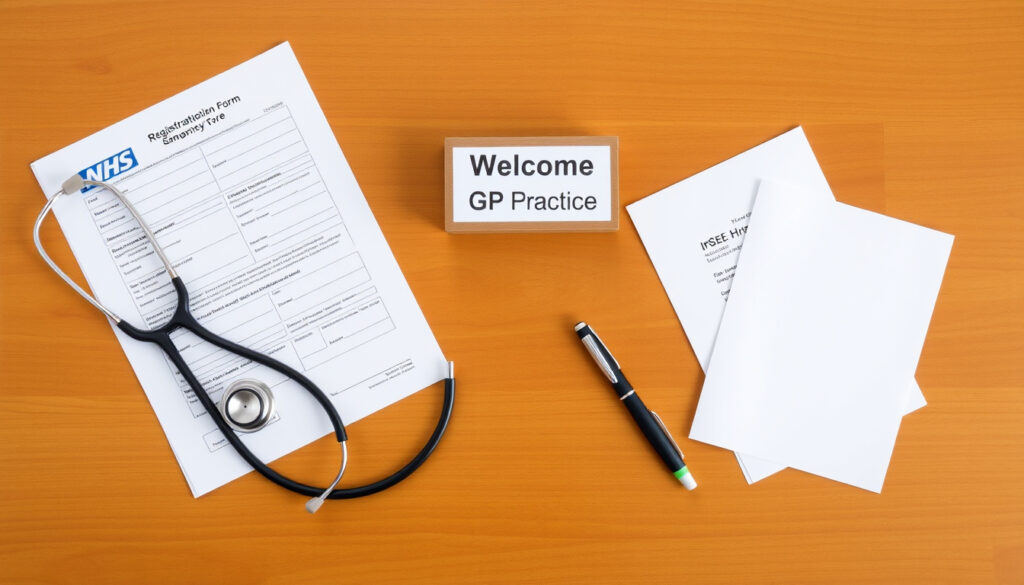
How to register with a GP: Ireland & UK guide (2025)
Few things feel as bureaucratic as signing up with a new doctor — especially when you’re moving between countries or just haven’t gotten around to it. In England, the NHS (England’s public health service) says you do not even need to show ID to register. This guide walks through the process in Ireland and the UK side by side, covering what documents you actually need, what it costs, and how to switch surgeries if you move.
Average GP visit cost (Ireland, private patient): €50–€65 · GP visit cost (UK, NHS): £0 (free at point of use) · Number of GP practices in England (NHS Digital): ~6,700 · Time to register with an NHS GP (online): Often same day
Quick snapshot
- GP registration in the UK is free (NHS)
- You need proof of identity to register in both countries (DrOnline.ie (private health information site))
- Medical card holders in Ireland get free GP visits (DrOnline.ie)
- You can transfer GP without explaining your reason (NHS)
- Whether non-residents can register with a GP in Ireland
- If homeless individuals can register without a fixed address (though UK rules allow it)
- Exact waiting times for record transfer between Irish GPs
- Whether temporary visitors can register with a GP in the UK as a temporary patient
- NHS online registration form takes about 15 minutes (NHS)
- People are usually told they have been registered within 5 days (NHS)
- Once registered, you can book appointments, request prescriptions, and access the NHS App (NHS)
- In Ireland, you may need to arrange a first appointment to establish care (NHS)
Six key facts sum up the differences between the two systems.
| Fact | Value | Source |
|---|---|---|
| GP visit cost (Ireland, private) | €50–€65 | DrOnline.ie (private health information site) |
| GP visit cost (UK, NHS) | £0 | NHS (England’s public health service) |
| Registration requirement (Ireland) | Residence + ID + address proof | DrOnline.ie |
| Registration requirement (UK) | NHS number or ID (but not required) | NHS |
| Number of GP practices in England | ~6,700 | NHS Digital (digital.nhs.uk) |
| Number of GP practices in Ireland | ~3,000 | HSE (estimate) |
What do I need to register with a GP in Ireland?
To register with a GP in Ireland, you must be a resident. According to DrOnline.ie (a private health information site), most surgeries ask for proof of identity (passport or driving licence) and proof of address (a recent utility bill). If you are a public patient, you may also need your Personal Public Service (PPS) number.
- Proof of identity required: Passport, driving licence, or national ID card.
- Proof of address: Utility bill, bank statement, or official letter with your name and address.
- Medical card or private patient status: Medical card holders get free GP visits; private patients pay out of pocket.
- PPS number for public patients: Speeds up the process but is not always mandatory.
The registration itself is usually free, but the first consultation fee for a private patient runs €50–€65, as noted by DrOnline.ie and confirmed by Citizens Information Ireland (Ireland’s official public service information site).
The implication: If you are a private patient in Ireland, the cost of that first appointment is a real factor — budget for it before you sign up.
Private patients in Ireland face a €50–€65 fee per visit, but a GP Visit Card can cover those costs if you meet the income threshold. Missing that piece of paperwork could cost you.
The implication: private patients should plan for the upfront cost and check eligibility for a GP Visit Card.
How do I register with a GP in my area?
In the UK, the process is designed to be quick. You can use the NHS website or app to register online — the form takes about 15 minutes. You do not need ID or proof of address, and the surgery will confirm registration within five days.
- Find GP surgeries near you: Use the NHS service search or HSE list of practices. For nearby pharmacies, see our Pharmacy Open Now Near Me – Official NHS Finder Guide.
- Contact the surgery: Call or visit; some surgeries in Ireland require a face-to-face registration.
- Register online via NHS or HSE: The NHS online form is available for England; in Ireland, some practices have their own online forms.
- Register in person: Common in Ireland — you bring your documents and fill out a form (GMS1 in the UK, or a practice-specific form in Ireland).
In Northern Ireland, the process uses specific forms. The Business Services Organisation (HSCNI) (Northern Ireland’s health administration) advises using form HSCR-1 if you are registering from outside the UK. The form is also available in multiple languages.
What this means: Whether you are in London, Dublin, or Belfast, the upfront effort is small — usually a 15-minute form. The differences show up in the documentation each system accepts.
What documents do you need for GP?
This is where Ireland and the UK diverge most. The NHS (England’s public health service) explicitly states that you do not need ID, proof of address, or proof of immigration status to register. You only need to provide your name, date of birth, and address.
- Identification documents: UK – none required. Ireland – passport or driving licence typically needed.
- Proof of address: UK – not required. Ireland – utility bill or bank statement.
- Medical history or previous GP details: Helpful but not mandatory in either country.
- NHS or PPS number: UK – your NHS number is assigned automatically. Ireland – a PPS number speeds up public patient registration.
For private patients in Ireland, having payment details ready is wise — the surgery may ask for a deposit or card on file.
The pattern: The UK system is built on a trust-based model — you say who you are, and that is enough. Ireland’s system is more document-heavy, reflecting its different health funding structure.
UK residents skip the paperwork but may get assigned a GP further away if local surgeries are full. Irish patients bring documents but can more easily choose a specific practice.
The implication: the choice between paperwork and proximity is a key trade-off for new patients.
How much does a GP cost in Ireland?
Cost is a defining difference between the two systems. For private patients in Ireland, a single GP visit typically costs €50–€65, according to DrOnline.ie and Citizens Information Ireland (Ireland’s official public service information site). For medical card holders, GP visits are free. The Doctor Visit Card covers GP fees but not hospital or prescription costs. For a comparison with private insurance options, see our Bupa Private Health Insurance: 2026 Costs & AXA Comparison.
- Public vs private patient costs: Public patients with a medical card pay nothing. Private patients pay per visit.
- GP visit fee for private patients: €50–€65 average.
- Medical card holders: Free GP care.
- Doctor Visit Card: Covers GP fees only — not hospital stays or prescriptions.
Some GPs offer reduced rates for children or students, but this varies by practice. In the UK, the NHS covers all GP visits at no point-of-use cost, regardless of income.
Why this matters: A family of four in Ireland paying private GP fees could face €200–€260 per visit. The Medical Card or GP Visit Card is not just nice to have — it is a significant cost buffer.
How to transfer from one GP to another?
Transferring is straightforward in both countries. The NHS says you can simply register with a new surgery and your medical records will transfer automatically — you do not need to explain why you are leaving.
- Reasons for transferring: Moving home, dissatisfaction with service, or a change in health needs.
- Steps to change GP surgery: UK – register with the new practice. Ireland – inform your current GP and register with the new one.
- Transfer of medical records: UK – automatic. Ireland – may take days or weeks; ask your new GP to request them.
- Waiting periods: None – you can book an appointment as soon as you are registered.
No fees are charged for transferring within the same health system. In Ireland, if you are a public patient, your medical card covers the transfer. Private patients simply change their chosen GP.
The catch: In Ireland, if you do not explicitly ask your old GP to release your records, the transfer can stall. One follow-up phone call can save weeks of delay.
The implication: proactive record requests in Ireland are essential to avoid delays.
Clarity: What we know and what remains uncertain
Confirmed facts
- GP registration in the UK is free (NHS)
- You need proof of identity to register in Ireland (DrOnline.ie)
- Medical card holders in Ireland get free GP visits (DrOnline.ie)
- You can transfer GP without explaining your reason (NHS)
What’s unclear
- Whether non-residents can register with a GP in Ireland
- If homeless individuals can register without a fixed address (though UK rules allow it)
- Exact waiting times for record transfer between Irish GPs
- Whether temporary visitors can register with a GP in the UK as a temporary patient
The pattern: the UK system is more permissive for vulnerable groups, while Ireland’s requirements are stricter.
What experts say
You can register with a GP surgery online using the NHS App or website.
NHS England (public health authority)
To register with a GP, you need to be a resident in Ireland and provide proof of identity and address.
HSE website (Ireland’s health service executive) — as summarised by DrOnline.ie
A private GP visit typically costs between €50 and €65.
Citizens Information Ireland (official public service information)
Summary: For new residents in Ireland without a medical card, the cost of a GP visit (€50–€65) is a significant consideration — registering early and securing a GP visit card if eligible is advised. In the UK, the absence of upfront costs and paperwork makes registration almost frictionless, but the trade-off is less choice of individual practice if local surgeries are full. For anyone moving between the two countries, the implication is clear: bring your documents if heading to Ireland, and leave them at home if heading to England.
For those in the UK, the process is straightforward and is outlined in the complete NHS guide to registering with a GP.
Frequently asked questions
How long does it take to register with a GP?
In the UK, the online form takes about 15 minutes and confirmation usually comes within 5 days. In Ireland, registration may be immediate if you visit the surgery with your documents, but full transfer of records can take longer.
Can I register with a GP if I am homeless?
In the UK, yes — the NHS says you do not need a fixed address. In Ireland, practice varies; some surgeries ask for proof of address. Contact your local health centre for guidance.
What is a PPS number and do I need it for GP registration?
A Personal Public Service (PPS) number is used in Ireland for accessing public health services. It is not mandatory for GP registration but helps if you are a public patient seeking a medical card or GP Visit Card.
Do I need to bring my medical card to register?
Yes, if you have one — the surgery will need to verify it for free GP visits. Without it, you will be registered as a private patient and charged the standard fee.
Can I register with a GP outside my local area?
In the UK, many surgeries accept patients from outside their immediate area, but it is not guaranteed. In Ireland, you are expected to register with a GP near your home address.
How do I update my personal details after registration?
Contact your GP surgery directly. In the UK, you can also update your details via the NHS App.
What happens if I move to a different country after registering?
You will need to register with a new GP in your new country. Your current GP can provide a medical summary to take with you, and in the UK your records can be transferred to a GP abroad upon request.
More related posts
 Return to Silent Hill: 2026 Release, Trailer & Reviews
 Captain America Brave New World Reviews – Mixed Critic Scores and Reactions
 Ginnifer Goodwin Movies and TV Shows – Complete Filmography Guide
 Scotland v New Zealand – Scores, Tickets and 2026 Preview
 Exotic Bird Vets Near Me: Finding a Qualified Avian Vet
 B&M Near Me – Stores, Hours, Garden Centres Guide
 2 Fast 2 Furious (2003): Cast, Cars, Plot and Where to Watch
 One 4 All Card – Balance Check, Stores and Expiry Guide
