Once Upon a Time in America – Director, Cast, Where to Watch
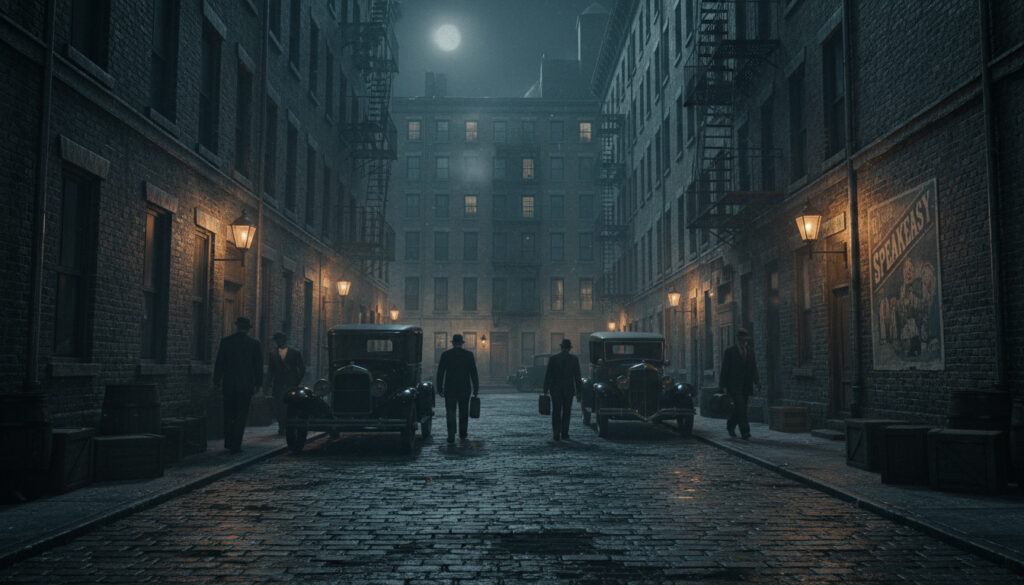
Released in 1984, Once Upon a Time in America stands as Sergio Leone’s final directorial work, a sweeping epic that traces the trajectory of Jewish gangsters across four decades on Manhattan’s Lower East Side. Adapted from Harry Grey’s 1952 semi-autobiographical novel The Hoods, the film operates on a canvas of ambition rarely attempted in the crime genre, weaving between Prohibition-era bootlegging operations and the hollow regrets of 1968.
The narrative centers on David “Noodles” Aaronson, portrayed by Robert De Niro as an aging man returning to his old neighborhood, only to confront the ghosts of betrayal and lost love through an intricate web of flashbacks. Rather than romanticizing organized crime, the production examines the corrosion of the American Dream among immigrant communities, set against a backdrop of opium dens, bootlegging wealth, and violent territorial disputes.
What is Once Upon a Time in America (1984)?
- Director: Sergio Leone
- Year: 1984
- Genre: Epic Crime Drama
- Based on: The Hoods by Harry Grey
- Chronicles 35 years of American history from 1923 to 1968 through non-linear flashbacks
- Represents Sergio Leone’s final completed film before his death in 1989
- Exists in two significantly different versions: a 227-minute extended cut and a 139-minute US theatrical cut
- Set specifically within the Jewish immigrant communities of Manhattan’s Lower East Side during Prohibition
- Explores themes of remorse, betrayal, and the corruption of the American Dream
- Features an acclaimed musical score composed by Ennio Morricone
| Fact | Detail |
|---|---|
| Release Year | 1984 |
| Director | Sergio Leone |
| Source Material | The Hoods by Harry Grey (1952) |
| Extended Cut Runtime | 227 minutes |
| US Theatrical Runtime | 139 minutes |
| Primary Setting | Lower East Side, Manhattan |
| Narrative Time Span | 1923–1968 |
| Lead Actor | Robert De Niro |
| Supporting Actor | James Woods |
| Composer | Ennio Morricone |
Who directed Once Upon a Time in America?
Sergio Leone’s Cinematic Vision
Sergio Leone directed and co-wrote the screenplay alongside Leonardo Benvenuti, Piero De Bernardi, Enrico Medioli, Franco Arcalli, and Franco Ferrini. This marked his return to filmmaking after a sixteen-year hiatus following Once Upon a Time in the West (1968). The project consumed the final decade of his life, with development beginning in the late 1970s as Leone sought to create an epic crime narrative distinct from his earlier Western repertoire. Production records confirm that Leone personally rejected early casting concepts involving Dustin Hoffman or Paul Newman, ultimately selecting Robert De Niro who chose to portray Noodles rather than the character Max.
From Novel to Screen
The adaptation process centered on Harry Grey’s 1952 semi-autobiographical novel The Hoods, written under the author’s birth name Goldwyn Selznick. Grey drew from his own experiences within the gangster underworld to construct the narrative foundation. The screenplay translation and expansion resulted in a 317-page shooting script finalized in 1982, requiring complex linguistic adaptation from Italian to English as the writing team refined the dialogue for American audiences while preserving Leone’s visual storytelling approach.
Harry Grey’s 1952 novel The Hoods provided the semi-autobiographical foundation for the film, with the author drawing directly from his own gangster experiences to authenticate the Prohibition-era criminal networks depicted on screen.
Once Upon a Time in America cast
Principal Performers
Robert De Niro anchors the film as David “Noodles” Aaronson, the adult protagonist navigating the criminal underworld from 1923 through 1968. Scott Tiler portrays the character’s younger incarnation during the formative years of petty crime in the Jewish slums. James Woods appears as Maximilian “Max” Bercovicz, Noodles’ ambitious and ultimately treacherous partner, with Rusty Jacobs playing the youth version. The romantic lead involves Elizabeth McGovern as Deborah Gelly and Jennifer Connelly as her younger self, creating a dual-timeline love story that fractures under the weight of criminal violence. Cast documentation records these dual casting choices across time periods.
Supporting Ensemble and Casting Methodology
The supporting roster includes Tuesday Weld as Carol, Darlanne Fluegel as Eve, and Joe Pesci as Frankie Minaldi alongside Burt Young as Joe Minaldi. Treat Williams portrays Jimmy Conway O’Donnell, while William Forsythe and James Hayden appear as the adult versions of Cockeye and Patsy respectively. Danny Aiello serves as Police Chief Vincent Aiello, and Larry Rapp appears as Fat Moe. Leone employed non-professional child actors sourced directly from New York’s Jewish neighborhoods to ensure authentic representation of the community. De Niro personally suggested Tuesday Weld for her role, though Leone selected Elizabeth McGovern over the actor’s initial preference for an actress with a Brooklyn accent.
Cast of Road House – 1989 vs 2024 Casts
Where to watch Once Upon a Time in America?
Locating the film through streaming services requires attention to both regional availability and which version is offered. Platform licensing changes frequently, with specific current status on Netflix, Disney+, or other major streamers remaining unconfirmed in available databases. Geographic restrictions significantly impact access, and the 227-minute extended cut versus the 139-minute US version may not both be available on every platform. Community tracking sources suggest checking current catalogs directly.
Specific platform availability for Netflix, Disney+, or other major streamers varies significantly by geographic region and changes monthly. Verification through official platform listings or regional JustWatch services is essential before subscription.
When locating the film, prioritize the 227-minute extended restoration released in 2012, which contains critical scenes absent from the 139-minute US theatrical version, including expanded opium hallucination sequences and additional character backstory.
How did production unfold across the decade?
- : Sergio Leone initiates development, envisioning the project as his next epic following Once Upon a Time in the West.
- : Finalization of the 317-page screenplay after translations from Italian collaborators.
- : Principal photography spans locations in New York and Montreal.
- : Original theatrical release in Europe.
- : US theatrical release in truncated 139-minute form by The Ladd Company.
- : Restoration of the 227-minute extended cut, incorporating previously deleted scenes including Louise Fletcher as a cemetery director.
What details are established versus uncertain?
| Established Information | Information Requiring Verification |
|---|---|
| Plot spans 1923–1968 with non-linear flashback structure | Current specific streaming platform availability by region |
| Directed by Sergio Leone based on Harry Grey’s novel The Hoods | Netflix catalog status (changes frequently by market) |
| Stars Robert De Niro and James Woods in principal roles | Whether additional deleted scenes beyond the 2012 restoration exist |
| Exists in 227-minute and 139-minute versions with significant content differences | Specific international box office figures for all markets |
| Set in Lower East Side Jewish community during Prohibition | Active Reddit discussion threads (none specifically documented) |
What cultural context defines this gangster epic?
Positioned within the tradition of American crime cinema but filtered through Leone’s distinct Italian perspective, the film examines the Jewish gangster experience during Prohibition—a demographic often overshadowed by contemporaneous works focusing on Italian-American organized crime. The narrative operates as Leone’s definitive statement on the American Dream’s corruption, tracing how immigrant ambition transforms into criminal enterprise and ultimate regret. As the director’s final completed work before his 1989 death, it represents a meditation on time, memory, and the impossibility of moral redemption within violent economic systems. Critical retrospectives identify it as an examination of fortune, pitfalls, and fractured friendships.
The Fantastic Four First Steps – Release Date, Cast, Box Office
What do film authorities say about the work?
Sergio Leone’s Once Upon a Time in America is an epic of fortune, pitfalls, and fractured friendships, chronicling the rise and fall of Jewish gangsters on New York’s Lower East Side during the Prohibition era.
— Frame Rated
An epic crime film that examines the corruption of the American Dream through the lens of Prohibition-era Jewish gangsters, marked by standout performances from De Niro and Woods and Ennio Morricone’s score.
Recognized within American Film Institute catalogs as a significant contribution to the crime genre and American cinematic heritage.
— American Film Institute
What defines Once Upon a Time in America today?
Once Upon a Time in America endures as Sergio Leone’s definitive cinematic statement on ambition and regret, distinguished by its novelistic temporal scope, devastating narrative architecture, and the stark contrast between its 227-minute restoration and the compromised 139-minute theatrical release. The film functions as essential viewing for understanding both the director’s artistic legacy and the evolution of the gangster genre beyond traditional Italian-American frameworks. Academy archives recognize its significance within 1980s cinema despite its initial commercial reception.
Additional questions about the 1984 epic
Is Once Upon a Time in America based on a book?
Yes. The film adapts Harry Grey’s 1952 semi-autobiographical novel The Hoods, written under the author’s real name Goldwyn Selznick, drawing from his personal gangster experiences during the Prohibition era.
Is Once Upon a Time in America currently on Netflix?
Current availability on Netflix varies by region and changes frequently. Specific Netflix streaming rights remain unconfirmed. Check regional Netflix catalogs or JustWatch for current status.
Who are the main actresses in the film?
Elizabeth McGovern portrays adult Deborah Gelly, while Jennifer Connelly plays her younger version. Tuesday Weld appears as Carol, and Darlanne Fluegel plays Eve in supporting roles.
What distinguishes the extended cut from the US theatrical version?
The 227-minute extended cut preserves Leone’s non-linear structure, dreamlike pacing, and full flashbacks. The 139-minute US cut removes extended opium hallucinations, character backstories, and alters narrative coherence.
Are there documented Reddit discussions about the film?
No specific Reddit discussion threads were documented in available data, though the film maintains active cult status and likely appears in general film subreddit communities.
Why did Sergio Leone cast non-professional actors?
Leone cast non-professional child actors from New York’s Jewish neighborhoods to ensure authentic representation of the community’s dialect and cultural mannerisms during the 1920s and 1930s sequences.
More related posts
 Sol de Janeiro 48: Cheirosa Review & Ireland Availability
 Wool Shops Near Me – Charlotte’s Top Yarn Stores Guide
 Camilla Al-Fayed – Mohamed Daughter, Farmacy Founder, Legal Clearance
 Kids Activities Near Me in Ireland: Free Family Fun
 Country That Starts With W – Why No UN Members
 VW Tiguan R-Line: Reviews, Price & Ireland Availability
 Cash Point Near Me – Guide to Free ATMs and 24/7 Access in UK
